Showing posts with label Stout. Show all posts

Friday, September 30, 2016

Friday Craft Beer Review: Lion Breweries’ Waikato Draught

Truth be told, this is the first time I’ve sampled Lion Breweries’ Waikato offering, despite it being one of New Zealand's oldest beers. 91 years old apparently!

According to beer historian Mr Wiki, Waikato Draught was originally brewed in Hamilton by the Innes Family Brewery, the first brewery in New Zealand owned by a woman. Lion Nathan acquired the brewery in 1961 with production continuing in Hamilton until 1987 before being moved to Auckland. Unfortunately for Hamilton, this shift to Auckland meant Hamilton officially became New Zealand’s "Most Uninspiring City.” A title held until the first class debut of Daniel Vettori for Northern Districts against England ten years later in 1997. His first wicket, that of Nasser Hussain (caught at first slip attempting to drive), is recognised by the local council of the time as breathing new life into the city and inspired their catch phrase “Hamilton; Where It’s Happening,” Good stuff Lucas! Shortly after they planted a garden and bought some hot air balloons and things have been on the up and up every since. But I digress. In 2005 Waikato Draught won gold in the draught category of the Brew NZ beer awards with its classic beer being described as having a “strong malty flavour with well-defined bitterness.” That’ll be something to look out for!


What else? Technically a draught beer is one poured via a handle and from a keg or cask, now-a-days though Waikato primarily comes in a can or a bottle. In fact, it is rare to find Waikato Draught on tap outside of the 7,067-person town of Huntly. Basically very view taverns are brave enough to invest in a 50 litre keg. It might take 10 - 15 years to work through that much Waikato Draught and not many publicans are willing to sign up to that kind of commitment. Nevertheless, if one is prepared to make the trip to one of Huntly’s local establishments you’ll be able to find Waikato Draught on tap as well as a better-than-average chance of a Thursday night schnitzel special. Just follow the sound of the Waikato chainsaws calling to each other (they don't text over there) and keep a look out for the Huntly Hurricane (aka Lance Hohaia). Draught continues to be used in the title only out of tradition. Other than that, as a malty/bitter beer we’d expect it to be in some way related to the Pale Ale family. Whether a long lost cousin to be welcome home or an ugly step sister, we’ll have to wait and see.    


Let’s see how this goes.

Price: $7.99 4x330mls. Waikato Draught is certainly priced competitively when one compares it to other craft beers we’ve reviewed. Interestingly enough, Waikato Draught gets cheaper per bottle when you buy in bulk. A box of 15 works out at $1.73 per bottle and a box of 24 at $1.66. In theory then, a 249 pack would work out at about .59c per bottle. They’re practically giving it away. Or, maybe my math is wrong.

Alcohol content: 4.0%

Colour: Deep amber and golden hues. Plenty of bubbles and a reasonable white frothy head.

Aroma: Faint notes of sweet toffee are discernable. There is also subtle sour note as well, kind of a mix between 24-hour charity relay sweat, apprentice builder’s body odour, and the sticky wooden floors of the Mount Rugby Club just before church used to start after a Saturday night 40th birthday back in the day.

Palate: Even chilled the sweet malt flavours come through, hints of Pam's golden syrup. Other than that it is simply wet and watery. It is slightly fizzy but totally lacking any body. In terms of strong taste and bitterness; whoever did the write-up extolling the virtues of this draught beer has obviously never sampled a good stout or a quality IPA. I’m not convinced this beer even has any hops in it.

Finish: The initial swig of this beer is quite palatable compared to the finish. The finish is where it becomes pretty off-putting as it is hard to work out what the tangy aftertaste exactly is. Many myths surround what may or may not be the special ingredients used in this brewing process. Since 2011 the general consensus seems to be Beaver's Rugby World Cup winning socks and undies, the very ones worn as he nervously took the kick that became "The Kick." I’m not convinced though. This old misty is even more tangy than that. It’s almost as if someone has combined the muddy water of the Waikato river with select segments of yellow snow from Mount Ruapehu and a hint of Stihl’s HP 2 Stroke chainsaw oil, and then actually put it in the bottle! It's hard to digest.

On the Chart: Well in terms of complexity we’re sitting pretty low. Well let’s be honest, this bit of mooloo magic just isn’t that magical and will line up right at the bottom of the chart. It’s also not hoppy in the slightest. And while it is a touch malty, it's certainly not anything like a deep dark porter or stout. This is pretty middle of the road. A refreshing beer rather than a beer to be savoured. It’s looking pretty lonely on the chart.

Conclusion: Truthfully, Lion Breweries’ Waikato Draught is an easy drink. Easy like a glass of water is easy. There isn’t a lot to it. I’d say that’s why it is sold in 24 packs and maybe even one day in 249 packs for .59c a bottle. I think the idea with Waikato Draught is to come back for more. This isn't craft beer. Craft beer is different. Craft beer is to be savoured rather than skulled, and the flavours, like anything of substance, eventually fatigue the palate. Most craft beers are sold as a single drink, though you do get a few 4 packs and a handful of 6 packs. This particular Waikato Draught was one of 4 but I’m bamboozled as to what to do with the other three; I’m not touching them. Glad I didn't get a box of 24.

In all honesty, it’s not that Waikato Draught is that bad, it more that it just isn’t that good. Why waste time or money on a beer like this? When you want a coffee you go to local cafĂ© for an espresso not to Gregg’s for an instant. It doesn't matter that Gregg calls it a "Special Blend" we know it isn't true. When you want steak you throw a scotch on the grill not a piece of marinated BBQ steak with those lines in it (where do those lines even come from anyway!?!). When you want a beer you pop a Tuatara or a Panhead or something from Garage Project. You stay away from Waikato Draught. At least I would. Quality over quantity I say. Less is more. This is an ugly step sister rather than a Cinderalla. Run!


Friday, September 2, 2016

Friday Craft Beer Review: Good George's Black (and also White) Rocky Road Stout

Coincidently we’ve another Good George offering to review this Friday. Two actually. I’ve just come back from some time overseas and while in the States managed to try some delicious beers. Stone’s “Enjoy-By” IPA, Russian River’s “Pliny the Elder” double IPA, and the very delicious “Viva La Beaver” by Belching Beaver, a peanut butter and Mexican chocolate milk stout, were all real stand outs. With that in mind, when I saw Good George’s recently released Rocky Road Black Stout and Rocky Road White Stout, I couldn’t resist. Maybe we’ve something that could compete with “Viva La Beaver.” Tonight we’ll review both the black stout and the white stout side by side.  


Before we get started though, let’s consider the use of the term “stout.” Both of these beers highlight the sense in which “anything goes” in craft beer land. That is, I’m not really sure that “stout” is the right label for these beers. Originally stout was the term used for a particularly strong beer, 7% ABV and above. “Golly-gee, that’s a very stout beer old chap!” Over time though it came to be primarily associated with the dark malty beer known as porter and favoured by London porters. Stout was the name reserved for the strongest of the porter beers and was a dark malty beer. Imperial stout was the term reserved for the strongest of the stouts, with these strong stouts originally exported to the Russian court and normally over 10% ABV.

With this in mind the term stout isn’t really appropriate for either of these beers. They are both only 5% ABV and thus the white stout isn’t strong enough to claim the name stout in the original sense and the black stout isn’t strong enough to claim the name in the more traditional sense of a strong porter. Here we probably need to appreciate that stout is now often associated with malt/coffee/chocolate flavours, with brewers referring to a beer as a “stout” if it has these flavour profiles. This has opened the door for brewers to brew both white and also golden “stouts.” It is a pretty liberal use of the term, for sure, but I guess it highlights how language changes over time. Personally though, I think stout should be reserved for black beers that are 7% ABV and above. If brewers don’t want to use the term “porter” for black beers under 7% because of marketing, surely the terms “black ale” or “dark ale” would suffice.

Enough mucking around though, let’s try both of Good George's Rocky Road Stouts, the black and the white. We’ll compare them side by side. Oh, I should also note that they are brewed in conjunction with the Hamilton based chocolate company Donovans. So a local collaboration going on here. Nice. 

Price: $5.25 330mls (both the black and the white stout)

Alcohol content: 5% (both the black and the white stout)

Colour:
Black:
Deep black even when you hold it up to the light. Slight macchiato head but faded quickly. Very little bubbles.
White:
Golden and slightly cloudy. Not cloudy like a wheat beer though. No head or bubbles really.

Aroma:
Black:
Strong raspberry smell coming through. Maybe a hint of chocolate but mainly raspberry. A touch of malt as well.  
White:
Again a very strong raspberry smell. Basically the same as the black but perhaps this white is a little more hoppy. I'm not sure if the black beer is making me think malt and the white making me think hops. Essentially a very similar smell though.

Palate:
Black: Slightly hoppy but mainly sour. Doesn’t really taste like rocky road or raspberry. Not a lot of body and watery through the middle. Kind of the opposite of a stout. Tastes like a raspberry sour. 
White:
Not as sour as the black, but still just tastes like a sour mix ferment. You wouldn't pick rocky road in a million years. Not anything like a stout either. No chocolate and if there is coffee it’s more like green beans than a dark malt roast.   

Finish:
Black:
The sour notes give way to a quite pleasant malt biscuit finish. Again, without wanting to labour the point, nothing "stout" like in this beer.
White:
Here the sour notes give way to a hoppy finish. It’s not that impressive. There are at least some coffee notes that come through here. 

On the Chart:
Black:
It’s more malty than hoppy for sure. And there is a degree of complexity. It’s not the complexity of chocolate, coffee and raspberry though. The raspberry comes though like a sour fruit beer and then there is some malt.
White:
Again more malty than hoppy. The hops are there but the sour notes of the raspberry stand out more. Slightly complex but in a confused way more than anything.

Conclusion:
Black & White: Lot’s of promise in these two cans of beer but at the end of the day they delivered little. Neither are really that nice at all to be honest. They are unusual at best, but proably more accurately; unpleasant and confused. Not enjoyable at all. Belching Beaver’s Viva La Beaver Peanut Butter and Mexican Chocolate Milk Stout is the beer I’d line these two up against in terms of potential wonder and complexity, but wow did they fall short. Can’t say I would recommend these but at the end of the day I preferred the black over the white if you are going to grab a can.


Friday, August 26, 2016

Friday Craft Beer Review: Good George's Coffee IPA

Good George is a Hamilton based brewery started by a couple of mates who wanted to convert people from mass produced “bland” beer, to the more creative and quality beer that is craft beer. You can visit the Good George brewery and dining room in Hamilton and see where all the action happens while enjoy some quality food and a cold beer at there onsite bar. Around the town Good George is pretty recognizable in that their beer is often seen in 1 litre squealers (946ml on the bottle actually). The squealer is the main stay for their main line of beers, but they also produce a whole variety of beers that come in cans and bottles.

I’ve got their Coffee IPA which has been brewed in conjunction with Rocket Coffee. Craft beer and espresso; what could go wrong!?! The only thing is, this is an IPA not a stout. It's not unusual to have coffee flavours coming through in a stout but an IPA is pushing things potentially. We'll have to see. 

So, remembering that IPAs are a balanced beer with both sweet malts and tangy hops coming through (normally slightly more hoppy than malty), it’ll be interesting to see where this one goes. 


Price: $4.99 330mls

Alcohol content: 6%

Colour: Dull golden colour. A little cloudy. Plenty of bubbles and a nice thick white head.  

Aroma: Smells fruity but there are also the unmistakable notes of hops coming through. There is an earthy kind of smell to it as well, a slightly objectionable smell. I’m not really picking up any coffee notes.

Palate: Refreshing, but not terribly sweet or fruity. You certainly get the hoppy flavours coming through. If there is any fruit it is pink grapefruit. No malts and no coffee as it swirls in your mouth.

Finish: The finish is quite clever. Here is where the coffee kicks in, as you swallow and the aftertaste in your mouth. The citrus notes blend nicely with the coffee here, especially if you’ve enjoyed sampling different varieties of single origin coffee shots, as they often have a real fruity citrus notes similar to what you get in this IPA. The coffee lingers, but the taste this more like what you expect in coffee flavoured milk or those cans of coffees you find in Japan. Not exactly delicious.

On the Chart: In terms of hops and malt, I’m not really picking up any malt flavours in this version of an IPA. The hopps are there, but it isn't over the top, perhaps just a bit more hoppy than a pilsner. There are some clever complexities that make it interesting enough to drink. So hoppy and somewhat complex.

Conclusion: This coffee IPA by Good George is interesting and somewhat refreshing. I wouldn’t champion it as a delicious beer though. Worth grabbing one time for something different, but you wouldn’t stack your shelves with it in preparation of some doomsday apocalypse. Stick to Tuatara’s Indian Pale Ale for that. I find the espresso type coffee that comes through in a coffee stout far more enjoyable than the canned coffee flavours I’m picking up in this IPA. This is all good though, even if I decide not to finish it. 


Friday, July 22, 2016

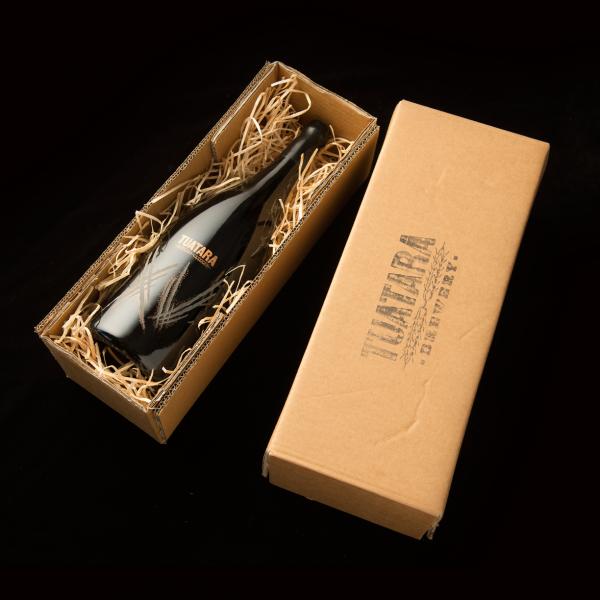
Friday Craft Beer Review: Tuatara’s XV Limited Release Aged Russian Imperial Stout

It’s winter and that makes it the perfect time to tuck into the darker ales. Last week we popped the top on Boundary Breweries’ London Porter. It’s a cheaper craft beer, a lot cheaper than this week’s XV, but it delivered beautifully. This week we’re tackling one of the big boys on the market at the moment. To celebrate 15 years of brewing Tuatara have released a limited edition “XV Aged Russian Imperial Stout.” And it looks pretty impressive!


XV – 15 years of brewing for Tuatara.

Aged – they actually brewed and bottled the beer in August 2015 and have carefully cellared it ever since. It’s been stored away getting more and more complex over the last 12 months.

Stout – A stout is “more-or-less” a stronger version of a porter. Usually between 7% and 8% rather than around 5.5%. Always a dark and malty beer.

Russian Imperial – Russian Imperial stouts were a type of stout brewed in England for the Russian Court in the 18th Century. A Russian Imperial tended to be an even bigger version of a stout, anything from 9% through to 15%. This imperial by Tuatara is 11%. So an Imperial stout is a big beer.  As a side note, this is why double IPAs are often called Imperial IPAs. Not because they were brewed for Russia, but because they are big beers as well; imperial has become synonymous with big beers.


Big with a stout doesn’t just mean alcohol though. Stouts are big across the board. Lots of different dark malts create potential for all sorts of flavours to come through; chocolate, coffee, liquorice, caramel, toffee, maple syrup etc. Lots of malts also mean space for plenty of hops (if a brewer wants to add hops), some stouts are very very light when it comes to hops. Tuatara has brewed this stout with Simcoe and Amarillo hops though, and it has an IBU bitterness rating of 100. That’s really high! Their Double Trouble APA was 165 and off the scale, while their IPA (probably my favorite beer) sits at 40. And even at 40 the hops come through still. So 100 is pretty hoppy. It will be really interesting to see the balance of this beer.  

Here we go!!!

Price: $17.99 500mils

Alcohol content: 11%

Colour: Black, deep dark black. Almost oily as it pours. Like molasses, so better grab a knife and a fork. It has a dark macchiato head. Looks amazing. Hold it up to the light and there is no colour coming through; it’s pitch black!

Aroma: Smell is delicious. Strong liquorice aroma. Coffee and chocolate. Also though, there are sour or herbaceous hoppy notes coming through too. Yum! 

Palate: This is genuinely amazing. And so much happening! At first there is a hot hoppy tang, but it is warm and tingly, almost like a liqueur. It feels so thick and creamy. The hops combine with the malts and offer a big liquorice flavour which then transforms into strong espresso coffee. This is awesome!

Finish: As you swallow the coffee is strong and then smooths out to a dark chocolate finish. Real dark chocolate though, like 80% cocoa, so it leaves a warm and bitter aftertaste. As you sit though, this mellows and your mouth feels like it has been painted with caramel sauce and crushed chocolate coated coffee beans. It’s delightful.  

On the Chart: This beer is about as complex as it gets. Surely! You’ll only going to see the bottom of the black bottle hanging down on the chart. It is a very complex beer and jumps straight to the top.  It’s an oily and black with so much malty goodness, but at the same time the hops come through wonderfully as well. Even though it has an IBU rating of 100, I’ll still be putting it in the malty section of the chart. The hops are not overpowering or harsh at all.


Conclusion: This beer was an absolute delight. Ballast Points’ Indra Kunindar Curry Stout is an amazing beer too, but you feel like you’ll only ever need to have it once in your life. This Tuatara XV felt like a beer worth getting again and again to share with friends. It may have already sold out though, so if you are after a bottle get one quick. $17.99 obviously makes it a more expensive beer, but well worth it. It really is a taste sensation!

Next week we'll check out Fat Monk's Raspberry Wheat Beer.


Friday, July 15, 2016

Friday Craft Beer Review: Boundary Road's London Porter

It's the middle of winter, mild as it might be, and that means log fires, hearty beef stews and even heartier black beers. Or, in other words, it's time to tuck into a variety of deep and dark porters and stouts. This week will have a look at a porter, and I've chosen a cheaper one on purpose. Firstly to see how it holds up, and then secondly, because next week we'll be reviewing Tuatara's 15th Anniversary Russian Imperial Stout; the XV. This one is a little more pricey.

So, Boundary Road's London Porter... Boundary Breweries launched in 1987 as competition to the two powerhouse breweries operating in New Zealand. Dominion Breweries (DB) and Lion Nathan. I’m not sure if they set out to brew “craft beer” or just largers capable of sitting alongside existing NZ beer. Either way they are now owned by the Japanese beer giant, Asahi, and brew a range of craft beers as well as Kingfisher, Carlsberg and Tuborg, (and I assume some Asahi as well), all under license. The fact that they do this, and the awful "ginger beer beer" they brewed one time, makes me suspicious of their ability to brew quality craft beer. It seems they are so diversified that to really do craft beer well could be a push. They also come across to me as "the supermarket craft beer." They actually promote on their website the supermarkets you can buy it from. Makes me wonder if it is cheap and nasty rather than the real deal. Still I thought I’d give their porter a go.


What’s a porter? How is it different to a stout?

There isn’t a lot of difference between a porter and a stout. If you search the internet, you’ll find plenty of interesting discussions of subtle differences but at the end of the day they are two different versions of the same sort of beer. Essentially. More or less. There is some debate. 

Basically though, porters originated in London as a dark style beer brewed using brown malts with the first record of "porters" being in the early 1700’s. Up until around 1700 beer was brewed and then sold to publicans who would age the beer themselves and serve when they felt appropriate. Porters were aged at the brewery and then sold to pubs. They were a strong beer, just over 6%, and apparently a favorite of beer among local street and river porters. 

Stouts were historically the strongest of the porters, 7% or 8%. Originally called “extra porters” or “double porters” or “stout porters” they were eventually known as “stouts.”

Nowadays porters are not a hugely popular beer, aside from in the craft industry. Even then, dark beers are usually brewed stronger, as stouts, and you’ll find a wide variety; chocolate stouts, Russian stouts or Imperial stouts, oyster stouts, chocolate stouts, oatmeal stouts etc. You can find honey porters, vanilla porters and chocolate porters aged in barrels if you shop around, but stouts tend to rule the roost. Looking forward to next weeks Tuatara XV Russian Imperial!

Let’s give this London Porter a try. I’m expecting creamy caramel malts and not a lot of hops. Also, I'm suspicious it will lack body, i.e taste watery through the middle. We’ll see. 

Price: $5.99 500mils

Alcohol content: 5.6%

Colour: Black (obviously) but when you hold it up to the light, it is a deep red where the light can get though. Nice head, creamy rather than coffee like as we sore with the Aro Noir. A few bubbles but nothing to note.

Aroma: Smell is subtle, hints of coffee and chocolate ice-cream.

Palate: At first a slightly bitter taste with the beer feeling like it lacks body, it feels watery. But then the depth kicks in with wonderful deep flavours; milk chocolate, caramel, instant coffee. As you tilt the glass to drink, you again notice the beautiful red hew in the light. It is a very deep red/brown.

Finish: The aftertaste is that of a double shot flat white in a tulip. Espresso now rather than instant. Then a couple of swallows later you get the residual bitterness of hops. Nice hops too, not overpowering or too "herby." 


On the Chart: This porter is about as complex as Garage Project’s Aro Noir but certainly not as hoppy. You pick up the hops for sure, but it’s malt that is leading the whole way. Complexity is the notes of coffee and caramel rather than the contrasting hops. 


Conclusion: I’ve no complaints about this beer. It was a lot more than I was expecting. It’s been a while since I’ve had a Guinness or a Kilkenny, both which I find pretty watery through the middle. They both seem to lack body and complexity (from memory at least). This London Porter doesn’t lake anything. It’s a great beer. Not as complex as an imperial stout, or a beer that has set out to actually capture chocolate or coffee or whiskey flavours, but still delicious. It’s a cheaper brew and it’s a supermarket brew, but provided you like a dark beer, there is nothing wrong with it. Good value for money. Yum. Time to chuck another log on the fire, put the old knitted reading socks on, and with feet up, tuck into a couple of chapters of The Hobbit. Better finish this delicious beer too. Good stuff.