Showing posts with label Beer. Show all posts

Wednesday, September 6, 2017

Craft Beer and Christian Spirituality

Based on the title above, it might be hard to appreciate that what follows could in anyway be a serious exposé – especially given that in some Christian circles alcohol is, well to put it bluntly, entirely of the devil. To my way of thinking though, linking Christian spirituality and craft beer has some promising possibilities.

Let me have a go…

In the church genre that I grew up in, alcohol was something frowned upon. Those involved in church leadership were required to refrain from drinking. A staunch adherence to this (not something practiced by all leaders) meant a cold pint on a hot summer day was off-limits. By implication it also meant that if time travel had been possible and you could have attended that famous first-century wedding in Cana, you would have been prohibited from toasting the bride with that most divine of red wines! Imagine that, imagine not being able to sip away on a lovely glass of “Mother’s Command, that one-off Canaan Syrah, heralded by one sommelier as the finest of the fine wines! [Vintner Jesus Christ. Vintage approx. 29 AD). Certainly, for me, the thought of turning down a glass (or two) of this delectable oinos in favour of a raspberry lemonade, well, it puts my head in a spin.


Writing in Tasting Beer, connoisseur Randy Mosher makes the following comment regarding those who came-of-age during America’s prohibition; “A whole generation grew up viewing alcohol as forbidden fruit, which makes it all the more tempting, but in a dirty, creepy sort of way.”[1] This is a keen observation, and something that is often true, especially when that which is forbidden is actually something that can be engaged-with in an appropriate manner. Likely, some who came-of-age in a “church of prohibition” ended up with a perverted attraction to alcohol as well, at least in their younger years. More common though, would be a more basic and legalistic type objection to alcohol: it is evil, bad, wrong, unwise, to be avoided at all costs, dangerous and corrupt. Essentially, you could say, something to be feared.

Too much fear though (and too much worship), empowers realities within creation that were never intended to be feared, worshipped or empowered. It establishes them as what the Bible calls principalities and powers; false gods. Most ancient cultures venerated a god of wine or beer; Dionysus was the Greek god of wine, Liber the Roman. Ninkasi was the Sumerian god of beer, Sucellus the Celtic god of ale. In our twenty-first century context, we may not refer to these gods by name, nevertheless many people still live either in the worship of, or the fear of, alcohol as a false god. There is a better way.


Alcohol is neither to be feared or worshiped; this is the domain of God alone. Alcohol is an entity within creation and should be related to accordingly and not empowered inappropriately. This requires wisdom, something which should be about as clear and obvious as the chocolate in Behemoth’s Triple Chocolate Milk Stout. i.e. pretty darn obvious! But this is the point. When you practice wisdom in situations where it is obviously required, it makes it that much easier to practice wisdom in areas where it doesn’t seem so necessary. By making alcohol a “forbidden-fruit,” even with the best intentions of keeping people safe, it removes the need to learn wisdom, and instead, promotes avoidance, disengagement, and disapproval. Certainly, these are appropriate concepts at times, but wisdom trumps them all. 

Further, when we don’t learn to exercise wisdom where it is obviously needed, it makes it that much harder to learn how to exercise wisdom in areas where the need is less obvious. We get lulled into a false dualism where things are either “bad” and to be avoided, or “good” and anything goes. The world doesn’t work like that though. There is no such thing as anything goes. Every facet of life requires wisdom in some way, shape or form.


Sin hasn’t only damaged humanities relationship with God, it has also damaged the internal relationship we have with our very own self, with other people, and with the rest of the created world we live in. As a result, everything can and does get out of hand if one’s not careful. Wisdom is needed in all things; the food we eat; how much we sleep; the technology we develop and how we use it; the exercise we engage in; how we look after our lakes and rivers; how we engage with social media; the way we manage our fisheries; the forests we cut down to plant crops; how we organise social infrastructure; the sugar we consume; the television we devour; the stories we allow to frame our lives; the stories we resist. And on, and on, and on.

Avoidance doesn’t teach wisdom.

Selah

So firstly, when it comes to alcohol the movement needs to be away from worship (at one end of the spectrum and sadly highlighted by alcoholism), and away from inappropriate fear (at the other end of the spectrum and often expressed in legalism), and towards a relationship of wisdom.

In wisdom, one can then make choices about abstinence or consumption, free of both fear and lust (inappropriate desire), and free from any need to judge the choices of another.

The obvious need to develop wisdom in relation to alcohol serves as a catalyst in developing wisdom in areas of life that don’t immediately appear to require wisdom.

Selah

Everything so far, I think, is good stuff, but the link to Christian spirituality is still probably a little tentative. Craft beer turns things up a notch though, so let’s push on.

In contrast to growing up in a church genre opposed to alcohol, for many Christians in the monastic communities of Belgium, cottage industry craft brewing served as a standard means by which they’d raise the funds necessary to support the life of their order. Modern churches pass the bucket and look for wealthy donors, but the older monastic orders would brew fine ales and export them around the world. How cool is that?! Surely a possibility for St Luke’s, especially given St Luke is the Patron Saint of Brewers?


The more famous of these monastic breweries are referred to as Trappist breweries and are run by Catholic monks who live as cloistered contemplatives, in accordance with the Rule of St. Benedict. Over the years many of the successful Trappist breweries have been bought out by industrial brewing companies, and their beers are now referred to as “Abby” beers. There are still eleven officially recognised Trappist breweries running today. Six of these are Belgium monasteries; Achel, Chimay, Orval, Rochefort, Westmalle, and Westvletren. The others are in Holland (2), Austria, Italy, and the United States.

To be designated a Trappist brewery there are certain criteria that must be met.

Firstly, the beer must be brewed within the walls of a Trappist monastery, either by the monks themselves or under their supervision. The brewery cannot be relocated as an industrial enterprise.

Secondly, the brewery and the beer must be of secondary importance to the monastery. In other words, the monastery’s main reason for existence must be monastic pursuits; contemplation, prayer, the study of Scripture, service and the worship of God. The brewing of beer comes after these endeavors.

Thirdly, the brewery is not to be an unfettered capitalistic-type profit-making venture. The income drawn from the production and sale of beer is to cover the living expenses of the monks and the maintenance of the monastic buildings and grounds. After that, any other profits are to be donated to charity.

Trappist beer is thus brewed in smaller quantities than other beers. On average 4,400,000 litres per year. The least per year is 200,000 litres (Tre Fontane Abbey and Stift Engelszell), the most is 14,500,000 litres per year (La Trappe which you can find in your local New World Supermarket here in NZ). While this is a lot more than your average homebrewer, it is a long way short of companies like AB InBev which owns 500 different beer brands, with multiple beers brewed under each brand, including the likes of Corona (985,320,000 litres), and Bud-Light (something like 14,662,500,000 litres). That’s a thousand times more beer than the largest Trappist produce, and that’s only one beer within 500 different beer brands.

La Trappe (Holland - 1884) 

These smaller quantities are not to suggest that Trappist beers are second rate; far from it, Westvletren is widely regarded as the worlds “best” beer. It is hard to get one’s hands on though, as it is generally only sold at the actual gate of the monastery in Belgium. By the time it does get to New Zealand, if it does get that far, being so rare the price skyrockets. A 330ml bottle goes for $101 NZD (Belgian Beer Café off Queen Street, Auckland).


Here though, we’ve craft beer at its finest. We’ve monks brewing away, in all things working whole heartedly for the glory of God (Colossians 3:23). We’ve intense flavour profiles, delicious to some, off-putting to others – but that doesn’t matter, it’s not being brewed for mass consumption but rather for connoisseur-like enjoyment. The connoisseur part is important. We’ll come back to this in a minute.

How is this for a business ethic though!?!

1) The business, in this case beer, is secondary to the main pursuits of life; prayer, study, service, worship, community. Business is a means, but not the end in and of itself. But, rather than money being the end, other pursuits are the end.

2) Statutes of limitation are put in place; the goal is not maximum production and profit. One knows when to stop. This makes space for others; monopolization is avoided, which creates gaps in the market that other business can fill and in doing so creates jobs and opportunities for others to flourish in life.

3) The product produced is top shelf quality. It never sets out to be a mass produced, or appeal to as many as possible type product. In this case, one-size-fits-all beer-flavoured-water (Bud-Light). It’s happy to be unique even to the point of alienating some while appealing to others.

4) Once a certain level of profit is achieved the rest is donated to charity to make the world a better place. The business exists mindful of the needs of the wider community within which the business operates. There is a concern for one’s neighbours.

One of the key attributes of wisdom is awareness. This is business awareness at its finest.

So before we even get to talk about conscientious consumption, Trappist beer hits us with conscientious production – this is awesome!

Selah.

Most craft beers are produced with a “similar” ethos. Though the profit and the charitable aims wouldn’t align. Nevertheless, they are small batch brewing with little desire (or hope of) monopolizing the market. (And, when certain craft beer breweries take off, eventually “selling-out” to the big multinationals, more often than not, consumers are annoyed and often move on to other brands – Emmerson’s, Ballast Point etc.). In terms of flavours, craft beers offer deep, contrasting, complementary, complex, and sometimes even off-putting flavours.

Ultimately these beers aren’t designed for mass production or mass consumption, they are so flavoursome they actually fatigue the pallet. Like a good lemon meringue pie, the first piece is simply divine, once you’ve had that you’re pretty much done. “A second piece?” “Ah, no thank you.” Craft beer is a bit like that. Randy Mosher, again in Tasting Beer explains; “Large brewers know that their drinkers value drinkability above all else. Drinkability basically requires drinkers to stop drinking because they know it is time to stop even though they don’t want to. [Though of course many consumers don’t]. Hence the bitterness in mainstream beers is incredibly low, and corn and rice is often used instead of malt. The beer is light and watery. In contrast, the complexity of the hoppy bitterness and malty caramel in craft beer are intended to fatigue the pallet.”[2]  (Paraphrased).

Hence, craft beer is really an invitation to drink as a connoisseur rather than simply as a consumer. And this is the big game changer.  

The difference between a consumer and a connoisseur is ultimately one of awareness and appreciation. Consumers are mostly concerned with taste, convenience, price point, and quantity. Connoisseurs though, they want to know the bigger story. Where is the beer made? What is the brewer attempting to do? What flavour profiles should I be expecting pick up? What are the tasting notes that accompany this beer? How does this compare to other similar styles of beer? What’s the history of this style of beer? What is the alcohol percentage in is this beer? What glass would highlight the flavour profiles in this beer? What food should I match this beer with? Etc. etc..

The whole process is slower, more thoughtful, more engaged, more present. There is a deeper awareness of what is going on. Both in the production of the beer and in the consumption of the beer. As a result, one ends up paying more for less, but in return gets so much more. But the connoisseur is in their happy place.

With craft beer, it’s not about mowing the lawns, working up a sweat, and then popping the caps and chugging down a couple of bottles faster than you can say; “Heineken equals water,” rather as Mosher puts it; “Presentation is half the game. It’s not cheating. A great beer poured into a perfect glass at just the right temperature, in the best possible setting, with friends old and new should always be the goal. Anything else cheats the brewer and the drinker alike.”[3]


And then he describes drinking a beer as follows… “Consider the beer-filled glass in your hand. Look closely. Study the rich colour and slight viscosity [thickness] of the liquid. Observe the way the light plays on the shimmering highlights. Watch the bubbles as they form and rise lazily through the beer, adding to the creamy foam on the top, hushed and peaceful as a snowfall. Lift the glass to your lips, but first, pause to inhale and ponder the aroma. Draw in the bready, caramelly, or toasty foundation of malt, the brisk green counterpoint of hops, and the swirling cupboard of spices and fruit, earth and wood. These scents can fire off neurons in the forgotten happy corners of your memory, as powerful an experience as any art form. Finally, have a taste. The beer floods in, cool and crisp or warm and rich. Observe the first blush of flavour and the tart tingle of carbonation. As the beer warms in your mouth, it releases a new round of flavours and sensations: malty sweetness, bright herbal hops, a touch of toast, all building to a bittersweet crescendo. It’s not one single taste; it’s an ever-evolving cinematic experience unspooling as you drink. A soft inward breath stirs a new layer of beery perfume. The grand finale comes as a long-fading aftertaste, with lingering wisps of resin, toast, or honey, concluding perhaps with a gentle warming alcohol sensation in your throat.”[4] 

That’s just glorious.

He adds; “If you can read the meaning in these sensations, the whole history of brewing opens up, and the long process reveals itself in the beer."[5]

Or, perhaps you could put it like this; when you learn to drink like a connoisseur you discover an invitation into a story far bigger than you ever imagined, a story of golden barley fields, brew houses large and small, hop harvests, toasting racks, tasting notes, fermentation, contemplation and taste sensations.  

Ultimately, to drink as a connoisseur means to drink slowly, carefully, considerately, with some knowledge, with some awareness, with some appreciation and understanding of what is going on, with wisdom, with an eye to the far larger story.

When you add your Christian faith to that mix you’re not far away from engaging in a sacramental appreciation of life. Perhaps you could say it like this; connoisseur like appreciation is the doorway to sacramental living. Perhaps you could even say it like this; a Christian connoisseur can’t help but be a sacramental Christian.

And what is a sacramental Christian? One who finds their way to God via the signposts of everyday ordinary life. They are aware that there is no such thing as everyday ordinary life – it’s all a gift and part of a far bigger story. A story of grace and love and hope and possibility. Of a God who created the universe and looked at it all and said; “Good, good, good, good, and very good!”

When it comes to craft beer, a Christian connoisseur, as a sacramental Christian doesn’t simply drink with restraint (or abstain entirely when that is appropriate, aware of the dangers of over indulgence and not causing others to stumble etc.), that’s just entry level wisdom. Rather, they drink with eyes-wide-open to the wonder and glory of God. There is an enhanced degree of wisdom.

At the end of the day a Christian connoisseur – a sacramental Christian – takes the things of the world far more seriously than folk who think of themselves as worldly. Every facet of life is appreciated as a gift from God; the birds of the air, the stars of the night, the laughter of children, the glory of a sunset, the embrace of a friend, the intimacy of a spouse, the bread and wine of communion, the waters of baptism – and even craft beer. 

The glory is not the beer itself, but rather, the glory of God that it points to.

The secret is not the beer itself, (Liberty Brewing’s Knife Party IPA rather than Steinlager’s nonsense) but rather, the mindset of a connoisseur.

The call is not for everyone to suddenly start drinking craft beer, but rather to quit being a consumer and to become a connoisseur of life.

Our consumer driven, capitalist, modern growth economy requires an almost superficial attachment to people and things. We need to be free to follow the market – the new, the novel, the next thing. Spouse 2.0, church 5.0, iPhone 8.0, purchase 13.0 – moving from one thing to the next, devouring, consuming, forking out more dollars in the hope of finding satisfaction – you won’t!

Quit being a consumer and become a connoisseur. 

Consumers; they don’t like this or that or the other thing, they are never satisfied, they are quick to judge based on personal tastes and instant gratification. They are surface deep and miss what is going on.

Connoisseurs realise there is more to the story – their insight, understanding, appreciation, knowledge, grace, wisdom, and ultimately love – helps them to see things with different eyes.

God is not far off, God is near. God is not stingy, God is generous. God doesn’t add heavy loads, his yoke is easy and his burden is light. God is present in all things, it is in him that we live and move and have our being.

It’s all a gift to be savoured and should be appreciated with the passion of a connoisseur.

The call is to become a connoisseur of life!

A connoisseur of friendship.
A connoisseur of marriage.
A connoisseur of creation.
A connoisseur of parenting.

Connoisseurs realise it is all a gift from God. And that changes everything. There is a new awareness of the divine that begins to shape the entirety of one’s life. When wisdom discovers Wisdom everything changes.  

Colossians 1:15-20
We look at this Son and see the God who cannot be seen. We look at this Son and see God’s original purpose in everything created. For everything, absolutely everything, above and below, visible and invisible, rank after rank after rank of angels—everything got started in him and finds its purpose in him. He was there before any of it came into existence and holds it all together right up to this moment. And when it comes to the church, he organizes and holds it together, like a head does a body. He was supreme in the beginning and—leading the resurrection parade—he is supreme in the end. From beginning to end he’s there, towering far above everything, everyone. So spacious is he, so roomy, that everything of God finds its proper place in him without crowding. Not only that, but all the broken and dislocated pieces of the universe—people and things, animals and atoms—get properly fixed and fit together in vibrant harmonies, all because of his death, his blood that poured down from the cross.

Selah

The official Catholic prayer in relation to beer is as follows…

Priest: Our help is in the name of the Lord.
All: Who made heaven and earth.
Priest: The Lord be with you.
All: May He also be with you.
Priest: Let us pray. Lord, bless (make the sign of the cross +) this beer, which by your kindness and power has been produced from kernels of grain, and let it be a healthful drink for mankind. Grant that whoever drinks it with thanksgiving to your holy name may find it a help in body and in soul; through Christ our Lord.
All: Amen.

Craft beer and Christian spirituality – it’s a thing.
But really, it’s about a connoisseur mentality that leads to sacramental living.
Which actually makes it all about discovering the wonder and glory and gracious life giving the presence of God, not in the "things," but in the realisation that the "things" point to God.

Well, I'll drink to that! 


[1] Randy Mosher, Tasting Beer; An Insider’s Guide to the World’s Greatest Drink, (North Adams, MA: Storey Publishing, 2009), 21.
[2] Ibid., 65.
[3] Ibid., 2.
[4] Ibid., viii.
[5] Ibid., viii.

Friday, September 23, 2016

Friday Craft Beer Review: Moa's Festive Season Belgian IPA

A couple of weeks ago I reviewed Eagle Brewery’s RED IPA. In that review I mentioned the wide variety of IPA options that various breweries are coming up with these days. One variety mentioned was a Belgian Style IPA. Essentially this is an IPA brewed with Belgian yeast. Belgian yeast has a very distinct taste and to include it in an IPA changes the beer quite significantly. While off putting to some, others find it a very pleasant flavour. I enjoy the flavour when it is mild but find it pretty overwhelming when it comes through strong. Well funnily enough, after mentioning that two weeks ago, and then reviewing a traditional Belgian style abbey beer last week (delicious), I’ve come across a Belgian style IPA courtesy of Moa Brewing NZ.

Moa Brewing Company is based in Marlborough, New Zealand. While Marlborough is one of New Zealand’s most famous wine regions, Moa Brewing is all about delicious hand crafted beer. They launched in 2003 and have been going from strength to strength ever since. Most of Moa’s beers are bottle conditioned with yeast and sugar added to the brew just before bottling. This means their beers have a cloudy sediment at the bottom, nothing to worry about though, it all just adds to the magic.


Moa promote this beer as an American style IPA brewed with Belgian ale yeast. This little blurb points towards the beer being very bitter / very hoppy, with strong citrus, pine, and fruity notes. This will be followed by a distinctive after taste that comes from the Belgian yeast; off putting to some and delicious to others depending to how strong it comes through. In Moa’s St Joseph Belgium Tripel (yep, that’s right, what a name!) the yeast flavour comes through too strong for me. Other Belgians I’ve had were more balanced and truly delicious. Like Leffe’s Bruin. Yum. 

Let’s see how this goes. It has the potential to be a great combination. 

Price: $7.99 500mls

Alcohol content: 6.0%

Colour: Deep amber gold with plenty of bubbles and a lovely white frothy head. 

Aroma: Strong hoppy smells of grapefruit and tropical fruit. More fruity than herbaceous. 

Palate: Very hoppy but the hops are full of beautiful fruity bitterness. Reasonably fizzy. Really quite lovely. 

Finish: As you swallow you can't miss the distinct Belgian yeast flavour profile coming through. It is beautifully balanced though and comes through quite sweet and not at all over powering. There is a slight sweet toffee like malt finish too. Big bitterness sticks to the roof of your mouth while the lovely sweetness swirls around your tongue and cheeks.  

On the Chart: This festive Belgian IPA is pretty hoppy, probably more out towards the double IPA side of things, which you would expect with an American style IPA (APA). But the sweet yeast and toffee malts certainly add a nice complexity that mixes everything up. So we are well left and with a really great degree of complexity.

Conclusion: This is a really nice beer that has been well executed. The Belgian yeast is slightly milder than how it comes through in Moa's St Joseph, which for me is a positive thing. It's not too pungent. While it is quite a bitter beer the yeast and the malts provide a lovely contrast and everything fits together really nicely. If you like double IPAs or IPAs, and if you like the beers of Belgium, this is a really good combination. Good stuff Moa! 


Friday, September 16, 2016

Friday Craft Beer Review: Saint Bernardus' Abt 12

Today we’re reviewing an Abbey beer. Or is it a Trappist? What's the difference. 


Beer, it seems, has always been a Belgian tradition. The widespread beverage-centered Beaker Culture was present in Belgium from as early as 2800BCE. That’s a long time ago. Fast forward to the eighth and ninth century and monasteries dotted throughout the Belgian countryside give rise to one of Belgium’s great brewing traditions; abbey beers. Most monastic religious orders worked in various cottage industries to support themselves. Some made cheese, some farmed sheep, and others brewed beer. That's how they supported the ministry of the monastery. I can’t tell you how much I wish St Luke’s could start a microbrewery as a way of supporting the life and ministry of the church. Steeped in tradition I tell you! Steeped! Just looking for some financial backing. Anyone...?

Anyway, in the early days of monastic brewing, there was no such thing as “hopped” beer. The bitterness in beer was instead derived from “gruit,” a secret mix of herbs and spices disguised in grain. The right to sell and trade gruit was restricted to the religious orders and political houses of the day. Hops didn’t arrive in Belgium until the beginning of the 14th Century and when they did, permission to uses hops was granted by the regional Bishop and a tax was levied. There it is again people, the craft beer industry is a church tradition! I’m telling you!  

Over the centuries a vast array of different style brews were experimented with. Belgian brewers were artisanal in their approach. Or in other words, the brewer as an artist was under no obligation to brew beer that conformed to any particular pattern or style. Over all though Belgium beer tends to focus more on malt that on hops with drinkers preferring more nuanced beers rather than the big flavors more often associated with hops. Herbs and spices are often added and the beer is normally quite sweet. Most notably though, Belgian beer is brewed with a very distinct kind of yeast, that gives all Belgian beer a unique and distinct flavour.

What about Abbey beers verses Trappist beers? Abbey and Trappist beers are the direct descendants of monastic breweries. Abbey beers now refer to "abbey style" beers brewed by commercial brewing companies. Trappist beers are those still brewed by monks on a monastic property. There are licensed officially as Trappist beers. There are eleven monasteries still brewing and officially recognised as a Trappist brewery. Six in Belgium (Orval, Chimay, Westvleteren, Rochefort, Westmalle and Achel), two in the Neatherlands (Koningshoeven and Maria Toevlucht’s), one in the United States (St Joseph’s Abbey), one in Italy (Tre Fontane Abbey), and one in Germany (Mariawald, though they don’t brew beer and rather license other products as Trappist). This doesn't mean Trappist beers are superior to Abbey beers, but they are often harder to get your hands on. 


Abbey/Trappist style beers have tended to included, a dubbel (a dark brown fruity and spicy style beer, 6% - 7.8% ABV), a tripel (a golden beer, spiced and malty with refreshing hops, 7.5% - 9.5% ABV), a quadrupel (that is even bigger and bolder than a dubbel or tripel, a big, strong and dark beer ABV 10% and above), a saison, a witbier, a sour brown beer, and also lambics. Way too much to go into now and we’ve already covered a lot. 

Tonight’s beer is St Bernardus Brewery’s Abbot 12; a quadrupel! In 1945 the Trappist Monastery St Sixtus decided to limit it's production of beer to that which was needed for the monastery, gate sales, and sales to a few local taverns. Instead of brewing commercially they granted a licence to brew to a local cheese factory and Brewery St Bernard was founded. The brew master from Westvleteren became a partner in the brewery and bought some of the recipes from Westvleteren Abbey. As a side note Westvleteren 12 is regarded by some as the finest beer in the world and it very hard to get your hands on. Now brewing as St Bernardus their offerings are referred to as Abbey beers rather than Trappist and we'll be sampling their Abt 12 (Abbot 12). Here is the blurb straight from their website...

The St.Bernardus Abt 12 is the pride of our stable, the nec plus ultra of our brewery. Abbey ale brewed in the classic 'Quadrupel' style of Belgium's best Abbey Ales. Dark with a full, ivory-colored head. It has a fruity aroma, full of complex flavours and excels because of its long bittersweet finish with a hoppy bite. Worldwide seen as one of the best beers in the world. It's a very balanced beer, with a full-bodied taste and a perfect equilibrium between malty, bitter and sweet. One of the original recipes from the days of license-brewing for the Trappist monks of Westvleteren.

Let's see if it measures up.


Price: $9.99 330mls (pretty expensive, but it has made the trip from Belgium). 

Alcohol content: 10%

Colour:  A deep and dark cloudy brown. Very slight head that fades quickly.

Aroma: Smells sweet and spicy. Cinnamon, brown sugar, nutmeg, raisins and dates.  

Palate: It’s fizzy, sweet and spicy. Not spicy like hot chillies, but rather a pleasant tingle of baking style spices in your tongue. At 10% ABV it feels almost warm even though I’m drinking it chilled. Plenty of sweet caramel malt flavours coming through.  

Finish: It’s in the finish that you get the distinct flavour of Belgian yeast coming through. It’s not as strong as in a beer like Moa’s St Joseph but it is still unmistakable. This is a bit toned back compared to other Belgian beers I've had and is really nice. When more pronounced I don’t enjoy it as much. There is a bitterness at the same time, hidden inside the raisin cookie maltiness, just a touch but it balances things nicely. It is very sweet. The more I drink the sweeter it gets, almost port like. 
 
On the Chart: This wonderful beer is certainly down towards the malty end of the chart rather than hoppy. There is some hoppy bitterness for sure but it is subtle. In terms of complexity, there is plenty going on here. Yum, yum, yum. It’ll be up the scale in terms of complexity.
   

Conclusion: St Bernardus promote this beer as full bodied in terms of flavour and “a perfect equilibrium between malty, bitter and sweet.” I don’t think this is false advertising. This is pretty delicious. The Belgian yeast won’t be to everybody’s liking but if you find this part of the beer pleasant to your palate, you’ll find the rest of it delicious. It’s a big beer. No doubt about that. But it is also a beer with plenty of nuance and finesse. Well worth shelling out the $10 for it one time. I'll get another one some time for sure!


Reviews pending:
Moa's Festive IPA Belgium Edition.
Lion Breweries' Waikato Draft

Friday, August 26, 2016

Friday Craft Beer Review: Good George's Coffee IPA

Good George is a Hamilton based brewery started by a couple of mates who wanted to convert people from mass produced “bland” beer, to the more creative and quality beer that is craft beer. You can visit the Good George brewery and dining room in Hamilton and see where all the action happens while enjoy some quality food and a cold beer at there onsite bar. Around the town Good George is pretty recognizable in that their beer is often seen in 1 litre squealers (946ml on the bottle actually). The squealer is the main stay for their main line of beers, but they also produce a whole variety of beers that come in cans and bottles.

I’ve got their Coffee IPA which has been brewed in conjunction with Rocket Coffee. Craft beer and espresso; what could go wrong!?! The only thing is, this is an IPA not a stout. It's not unusual to have coffee flavours coming through in a stout but an IPA is pushing things potentially. We'll have to see. 

So, remembering that IPAs are a balanced beer with both sweet malts and tangy hops coming through (normally slightly more hoppy than malty), it’ll be interesting to see where this one goes. 


Price: $4.99 330mls

Alcohol content: 6%

Colour: Dull golden colour. A little cloudy. Plenty of bubbles and a nice thick white head.  

Aroma: Smells fruity but there are also the unmistakable notes of hops coming through. There is an earthy kind of smell to it as well, a slightly objectionable smell. I’m not really picking up any coffee notes.

Palate: Refreshing, but not terribly sweet or fruity. You certainly get the hoppy flavours coming through. If there is any fruit it is pink grapefruit. No malts and no coffee as it swirls in your mouth.

Finish: The finish is quite clever. Here is where the coffee kicks in, as you swallow and the aftertaste in your mouth. The citrus notes blend nicely with the coffee here, especially if you’ve enjoyed sampling different varieties of single origin coffee shots, as they often have a real fruity citrus notes similar to what you get in this IPA. The coffee lingers, but the taste this more like what you expect in coffee flavoured milk or those cans of coffees you find in Japan. Not exactly delicious.

On the Chart: In terms of hops and malt, I’m not really picking up any malt flavours in this version of an IPA. The hopps are there, but it isn't over the top, perhaps just a bit more hoppy than a pilsner. There are some clever complexities that make it interesting enough to drink. So hoppy and somewhat complex.

Conclusion: This coffee IPA by Good George is interesting and somewhat refreshing. I wouldn’t champion it as a delicious beer though. Worth grabbing one time for something different, but you wouldn’t stack your shelves with it in preparation of some doomsday apocalypse. Stick to Tuatara’s Indian Pale Ale for that. I find the espresso type coffee that comes through in a coffee stout far more enjoyable than the canned coffee flavours I’m picking up in this IPA. This is all good though, even if I decide not to finish it. 


Friday, August 12, 2016

Friday Craft Beer Review: Panhead's Quickchange XPA

Panhead is one of the new players in the New Zealand craft beer scene. Launched in 2013, Panhead started brewing in an old tyre factory and have designed their brand image around engines and motors and "monster" truck style brewing. They’ve five stock brews (a pilsner, a stout, an APA, a white IPA, and the XPA we are reviewing today). Then on top of that, they brew some pretty interesting seasonal specials as well, care to try a smoked ale or a salted gose beer?


The XPA we’re looking at today is an extra pale ale, with the emphasis being on extra pale. There focus seems to be on creating a "toned down pale ale." In their own words; “Sometimes you don't want your mouth flayed raw and your liver worked to a standstill.” So I’m expecting well balanced hoppy bitterness and the sweetness of malt, but I guess coming through gently. Sounds like it might lack body. In saying that, they are promising lots of hoppy fruitiness; “mango, guava, lychee and pineapple.” My mouth is watering. Let’s see.

Price: $7.99 500mils

Alcohol content: 4.6%

Colour: Definitely a very pale golden hew. Similar colour to a wheat-beer but not as cloudy. Very little head. Not many bubbles.

Aroma: Smells deliciously sweet and tropical. Pineapple comes through nicely.

Palate: Not fizzy at all really. Bitterness of hops hit the roof of your mouth instantly but then gives way to sweet fruit flavours. It’s certainly not super sweet or super fruity though and I’m not really getting “mango, guava, lychee and pineapple.” More green apple (like a basic cider) and a touch of nectarine. The floral/herby hop notes are present right the way though and bring a constant but not overpowering bitterness. Not really any malts and so no sticky sweet notes of caramel or toffee.


Finish: The subtle fruits give way pretty quickly and you’re left with tangy hops. It’s a pretty dry finish.

On the Chart: This Quickchage XPA, is billed as an extra pale, pale ale. It certainly is pale, but I think lacks the malty flavours needed in an IPA. Even as an IPA variant. It’s more hoppy than most pilsners, but wouldn't look out of place in a pilsner family photo. With this in mind, it’s off to the left in terms of hoppiness and pretty simple as a beer.  

Conclusion: This is a light and refreshing beer, quite hoppy overall and not terribly sweet. It’d fit nicely in your trundler if you’re out for 9 holes at your local hack. Don’t bother packing it if you’re teeing off at a “members only” recognised 18 hole course though. This XPA would be out of its depth on the freshly mown fairways and perfectly manicured sand traps of a real golf course. 

Friday, July 29, 2016

Friday Craft Beer Review: Fat Monk’s Raspberry Wheat Beer


This week we’re going to take on a wheat beer. It’s been a few years since I’ve had a wheat beer, I think a Hoegaarden from memory, and it was absolutely disgusting! Basically beer + wheat-bix + coriander + grapefruit/banana all blended together. Houston we have a problem! Now, it could have just been that particular beer or it could be that there is something in that particular flavour profile that just doesn’t suit my taste buds, I’m not sure. Either way, terrible stuff and it put me off. But maybe now, a little older and wiser, it might be worth having another go. After all, wheat beer is pretty popular.

Wheat beer is a traditionally European style beer. The German edition is a white beer and is traditionally brewed with a 50/50 wheat and malt mix. The Belgium edition includes extras like coriander and orange peel (Hoegaarden is Belgium). Because they are brewed with wheat and a lot less malt and than brown ales, IPA's or even pilsners, they really end up being a whole different genre of drink. They often smell like banana and spice and usually have don't have much hops and so tend not to be bitter. Sometimes they are mixed with cola, or served as a radler (half wheat beer and half lemonade). So I guess if this raspberry wheat version is no good I can at least try and adding some lemonade.

Fat Monk is a Hawke's Bay brewery. About 15 minutes down the road from where our family was holidaying a couple of weeks ago (Havelock North), and also the reason why I thought I’d try the beer. Better give something local a whirl. I also grabbed a couple of beers from The Hawke's Bay Brewing Company about 10 minutes in the other direction.  Locally there is also Zeelandt Brewery and Giant Brewing Company. Bored with mass produced largers, Fat Monk started out as a brew-pub and a part of Abbey Cellars (a local winery). They started their experimental brewing in 2012 and then serving and selling in 2013, thus they are pretty new to the craft beer scene.


Price: $7.49 500mils

Alcohol content: 4.7%

Colour: A pale watermelon red with the raspberry in the beer giving it the red hue. It looks very similar to a berry cider but is cloudy. There are stings of tiny bubbles but not much fizz.  

Aroma: Smells of mashed bananas and raspberry. It also smells a bit like cough medicine, but not in an overpowering or unpleasant way. 

Palate: Swirls around in your mouth, a bit like a sour cider. No malty flavours and no hoppy flavours. It really is a whole different kind of drink; something entirely “other” than beer. The wheat profile hits first and then sour raspberry comes through afterwards.   

Finish: It’s a pretty dry finish, as overall the beer isn't particularly sweet. Here the wheat profile sticks to the back of your mouth and is probably the most pleasant part of the drink. 

On the Chart: Here the chart doesn’t work. Wheat beer isn’t really regarded as malty nor hoppy and so a chart setting malt against hops is basically pointless. I’ll put it slightly to the left of centre because the sour notes work like a type of bitterness (kind of). In terms of complexity, well, it lacks body but still has a little bit going on, so it doesn't bottom out on the chart. 

Conclusion: Its perhaps not fair to make the first wheat beer reviewed a raspberry infused one, but hey, it is what it is. I asked my wife what she thought; “Well, I don’t like beer, but this tastes quite nice.” I think this pretty clearly points to the reality that this brew is more in the cider family than the beer family. It is beer, but it isn't beer. Ultimately this was, to me, a sour kind of cider and to be honest, not really that enjoyable. I better make sure that next time I review a wheat beer that it is a more traditional variety, like a Hoegaarden. I wouldn't go out of my way to track down another bottle of this, but if you like sour ciders and wheat beer, this would probably be a 10/10 for you. If that’s the case you’ll be all over Fat Monk’s Raspberry Wheat Beer.  


Next week we'll review Tuatara's Indian Pale Ale. I know I've already reviewed two of Tuatara's beers and there are so many other breweries doing cool things in NZ, but their IPA is one of my all time favourites and pretty much the beer I measure other beers against. Ciao. 

Friday, July 22, 2016

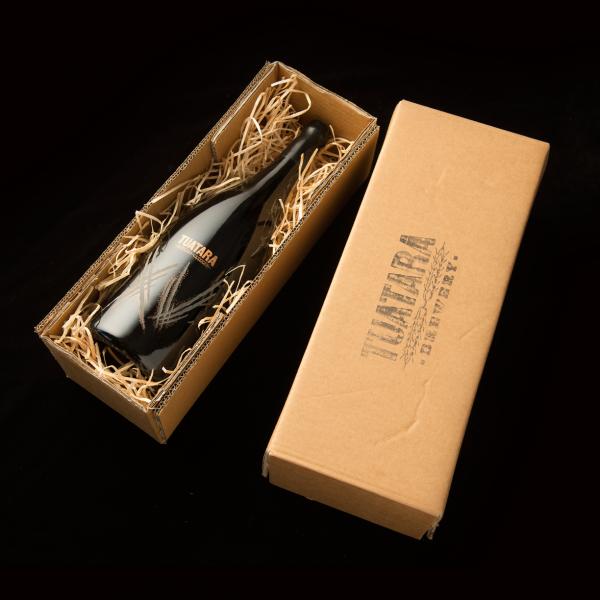
Friday Craft Beer Review: Tuatara’s XV Limited Release Aged Russian Imperial Stout

It’s winter and that makes it the perfect time to tuck into the darker ales. Last week we popped the top on Boundary Breweries’ London Porter. It’s a cheaper craft beer, a lot cheaper than this week’s XV, but it delivered beautifully. This week we’re tackling one of the big boys on the market at the moment. To celebrate 15 years of brewing Tuatara have released a limited edition “XV Aged Russian Imperial Stout.” And it looks pretty impressive!


XV – 15 years of brewing for Tuatara.

Aged – they actually brewed and bottled the beer in August 2015 and have carefully cellared it ever since. It’s been stored away getting more and more complex over the last 12 months.

Stout – A stout is “more-or-less” a stronger version of a porter. Usually between 7% and 8% rather than around 5.5%. Always a dark and malty beer.

Russian Imperial – Russian Imperial stouts were a type of stout brewed in England for the Russian Court in the 18th Century. A Russian Imperial tended to be an even bigger version of a stout, anything from 9% through to 15%. This imperial by Tuatara is 11%. So an Imperial stout is a big beer.  As a side note, this is why double IPAs are often called Imperial IPAs. Not because they were brewed for Russia, but because they are big beers as well; imperial has become synonymous with big beers.


Big with a stout doesn’t just mean alcohol though. Stouts are big across the board. Lots of different dark malts create potential for all sorts of flavours to come through; chocolate, coffee, liquorice, caramel, toffee, maple syrup etc. Lots of malts also mean space for plenty of hops (if a brewer wants to add hops), some stouts are very very light when it comes to hops. Tuatara has brewed this stout with Simcoe and Amarillo hops though, and it has an IBU bitterness rating of 100. That’s really high! Their Double Trouble APA was 165 and off the scale, while their IPA (probably my favorite beer) sits at 40. And even at 40 the hops come through still. So 100 is pretty hoppy. It will be really interesting to see the balance of this beer.  

Here we go!!!

Price: $17.99 500mils

Alcohol content: 11%

Colour: Black, deep dark black. Almost oily as it pours. Like molasses, so better grab a knife and a fork. It has a dark macchiato head. Looks amazing. Hold it up to the light and there is no colour coming through; it’s pitch black!

Aroma: Smell is delicious. Strong liquorice aroma. Coffee and chocolate. Also though, there are sour or herbaceous hoppy notes coming through too. Yum! 

Palate: This is genuinely amazing. And so much happening! At first there is a hot hoppy tang, but it is warm and tingly, almost like a liqueur. It feels so thick and creamy. The hops combine with the malts and offer a big liquorice flavour which then transforms into strong espresso coffee. This is awesome!

Finish: As you swallow the coffee is strong and then smooths out to a dark chocolate finish. Real dark chocolate though, like 80% cocoa, so it leaves a warm and bitter aftertaste. As you sit though, this mellows and your mouth feels like it has been painted with caramel sauce and crushed chocolate coated coffee beans. It’s delightful.  

On the Chart: This beer is about as complex as it gets. Surely! You’ll only going to see the bottom of the black bottle hanging down on the chart. It is a very complex beer and jumps straight to the top.  It’s an oily and black with so much malty goodness, but at the same time the hops come through wonderfully as well. Even though it has an IBU rating of 100, I’ll still be putting it in the malty section of the chart. The hops are not overpowering or harsh at all.


Conclusion: This beer was an absolute delight. Ballast Points’ Indra Kunindar Curry Stout is an amazing beer too, but you feel like you’ll only ever need to have it once in your life. This Tuatara XV felt like a beer worth getting again and again to share with friends. It may have already sold out though, so if you are after a bottle get one quick. $17.99 obviously makes it a more expensive beer, but well worth it. It really is a taste sensation!

Next week we'll check out Fat Monk's Raspberry Wheat Beer.