Showing posts with label Christan Calendar. Show all posts

Wednesday, October 30, 2019

The Great Christian Festival of Halloween and the Problem with Light Parties

Mostly, the various feasts and festivals that the Christian church has come to celebrate over the last two-thousand years trace their origins to either Judaism or the various pagan cultures in which Christianity took root in the early centuries A.D. In light of Christ, existing seasons and festivities were often re-appropriated as a celebration of some specific aspect of the life and ministry of Jesus Christ and of the Christian faith.

Rather than celebrating the Jewish festival of Passover, Christians tend to focus on the events of Christ’s death and resurrection in what has become Easter (though an understanding of both will enrich one’s faith immensely). Pentecost Sunday has come to be a celebration of the outpouring of the Holy Spirit in Acts chapter 2 and is less focused on Shavuot as a celebration of the wheat harvest and Torah.

When it comes to Christmas, the roots of this Christian celebration are not Judaism but rather stem from the winter solstice celebrations of the Roman Empire, and then later, from various Germanic tribes. In this sense, there is some truth to the idea that originally Christmas and some of the pageantry of Christmas finds its origins in pagan celebrations.

But. But where winter solstice marked the darkest dark and the slow turning of the seasons with the promise of the coming of a new sun, Christians subverted this idea and celebrated the coming of a different Son into the darkness of our world. Light and life to all he brings!

Together the various feasts and fasts of the Christian Calendar invite us to orientate our lives around the life of Christ. They even invite us to re-orientate our sense of time around Jesus.

Over time though, secular society does what secular society does, and takes the various Christian feasts, celebrations, and holidays that we have, and slowly but surely commodifies, commercializes, and bastardizes them. In doing so, it’s not just that a particular Christian feast is undermined, but rather that our sense of life being a reality organised around Christ is slowly chipped away at.

We think less of time as a gift, one that allows us the opportunity to simply be - to be with one another, to share life - and to walk a long obedience in step with Jesus. We start see time as a utility and a commodity to be spent – to be leveraged towards maximum productivity. Instead of living in the anticipation of Christ’s coming in Advent, in the celebration of Christ’s birth in Christmas, in the revelation of Christ as Saviour in Epiphany and so on, the framing categories of our life become; work weeks, school terms, university semesters, quarterly reports, annual reviews, the end of the financial year. Ultimately this is anxiety inducing, rather than life giving. 

Selah

In highlighting this, my point is not to rally the troops in some vein attempt to fight against the secularization of Christmas in contemporary society. I’m not trying to organise a “We Say Merry Christmas, Not Happy Holidays” protest march. My point is both narrower and broader in scope. Narrower in that my concern is not how secular society treats Christmas or Easter, only in how we as the Church do. But broader in that if we as Christians settle for a secular perspective on the various feasts and festivals, we lose track of time as sacred, and with it the fullness of Christian vision and theological insight that the Calendar offers as a discipleship tool. We need a renewed appreciation of the Church's liturgical calendar.

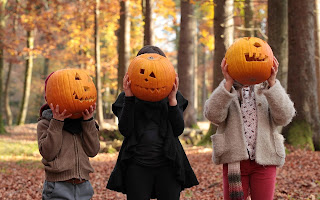
Which brings us to the great Christian festival of Hallowe'en!

Under the pantheon of the Roman gods, and in the folk religions of the early Celts and Germanic peoples, festivals were held that marked the seasons. I’ve already mentioned winter solstice. The autumn festival marked the end of the harvest and the beginning of winter. For the Celts this festival was known as Samhain (summer’s end).

These festivals were religious in nature in that as well as marking the season, they were also a liminal time where people imagined the boundary between this world and the otherworld thinned – fairies and ghosts and the souls of the dead could travel between the dimensions. With the souls of the dead supposedly able to return during these kinds of festivals, they became an occasion to consider death, to consider the under-world, to set a table for ancestors whose ghosts would return to visit their homes.

Traditions varied, and traditions evolved – one tradition included dressing as the dead or dressing as characters from the underworld and going door to door to collect treats or do mischief. This practice mimicked the idea that the gods were temperamental and couldn’t be trusted – you better make good sacrifices if you want a good harvest – otherwise they’ll give you nothing but mischief. Another was to carve pumpkins (originally turnips) into scary faces to scare off evil spirits.

The Christian Church looked at all of this and thought, we can do better than this, we’ve a new understanding of death, of what it is to confront death, in the light of Christ. The principalities and powers have been defeated, death is not the final word, the grim reaper is not in charge. And God is not a god of mischief, God is light and life and in him there is no darkness.

And so, the church inaugurated a different festival (as early as the year 609, and then it has evolved from there). Not a one-day festival, but a three-day festival known as All-Hallowtide. A festival designed to sit alongside or exist as an alternative to the various existing festivals of the dead and subvert them in Christ. Hallow means saints, thus we've All Saints Time, and it is a chance to consider and face the reality of death and fear of death we often carry. It is also a chance to remember those who have passed away, saints known and unknown. The three days are October 31st, November 1st, and November the 2nd.

October 31st – Hallowe’en: All Saints Eve, Hallow Eve, Hallow Evening. This day was an invitation to prayer, to renew one’s baptismal vows in the face our fear of death – I’ve already died in baptism, it is no longer I that lives but Christ that lives in me – and was a chance to reflect on our eternal hope in Christ: neither death nor Hades (literally the god of the underworld) are in charge and they do not have the final word in the face of death.

November 1st – Hallow Day: All Saints Day. A time consider the capital “S” Saints and martyrs of church history and to consider their lives as exemplars to us in our own journey. Not celebrity  Christians to follow but faithful saints in the truest sense.

November 2nd – All Soul’s Day. An opportunity to consider the lower-case “s” saints who’ve influenced our lives but have passed away over the course of the last year – friends, family, church members. And then more broadly, those who have influenced our lives but have passed away in years gone by.

All-in-all a chance for the Christian to face death, and, in doing so, to recognise that God is sovereign over death, faithful even in death, and that death has been unmasked as a false god.

Romans 8:35-39What shall separate us from the love of Christ? Shall trouble or hardship or persecution or famine or nakedness or danger or sword? (You could say; shall any sort of mischief come between us and God? No way!) As it is written: “For your sake we face death all day long; we are considered as sheep to be slaughtered.” (I’ve been baptised, it is no longer I that lives but Christ that lives in me!) No, in all these things we are more than conquerors through him who loved us. For I am convinced that neither death nor life, neither angels nor demons, (or fairies, or zombies, or scary pumpkins, or mummy’s wrapped up in toilet paper, or trick-or-treators dressed as the Kardashians) neither our fears for today nor our worries about tomorrow (especially about death, even though we try not to talk about in our modern world, we try and sweep it under the rug, the business of morticians and undertakers) – not even the powers of hell can separate us from God’s love. No power in the sky above or in the earth below, nor anything else in all creation (not even a zombie apocalypse), will be able to separate us from the love of God that is in Christ Jesus our Lord.

Allhallowtide (All Saints Time) with Hallowe’en, All Saints and All Souls, is a chance to cultivate a proper sense of Christian hope and perspective in relation to death – to remember that death is not the final word! Jesus is the resurrection and the life, our promise of eternal life. The story is not over and in the fullness of time, all will be made well, all will be restored, all will be renewed, every tear will be wiped away – and in the resurrection will be re-united– we will gather to break bread together once more. 

And thus, we say; “where oh death is your sting!?!” Not because the pain of losing a loved one is not real, is not heart-breaking, is not without its own kind of sting. We say, “where oh death is your sting!?!” because death is not, ultimately, that which destroys but that which will itself be destroyed. The love of God will conquer sin and death – and resurrection life will prevail.

Which brings us to the problem of Light Parties, (or at least the potential problem of Light Parties – they are really good for little kids). The problem is that secularism triumphs when christians decide that we need an alternative to the Christian festival of Hallowe’en. Especially if the reason for it is a fear of rubber masks, face-painting, toilet paper, and cobwebs made out of cotton wool – the ghouly and ghostly get-up of Hallowe’en. Secularism wins when we decide that we can’t face death with our kids – and the cartoonish representations of death that come with it – and declare faith and hope and the victory of Christ in all things. Secularism wins when we celebrate Jesus as the Light of the World but only with glow sticks in the sanctuary.

Hallowe’en is an opportunity (with our slightly older kids – the ones that have moved on from Bob the Builder) to, paradoxically, through the use of masks, actually un-mask and disempower the various “boogeymen” that creep into our imaginations (as children – and as adults) and fill us with fear. Especially the fear of death.

We’ve a chance to face these fears – through the dressing up and running around, through the putting on and then the taking off of masks, kids get the chance to expose various monsters as make belief. And then, in conversation with parents to recognise that “there is a light that shines in the darkness, and is not overcome,” and “there is a power greater than death and it is Jesus.”

A Christian participation in All Hallow’s Eve, All Saints Eve, Hallowe’en (even the “trick or treating” part of it) and also All Saints and All Souls day is not some sort of compromised glorification of the occult – rather – it is a good time for us to allow death and other things that scare us into our celebrations and conversations, especially with our kids, in order to then unmask them and speak of the life and power of Jesus Christ. When all the masks are taken off we can have conversations about things that scare us, about death, about the power of Jesus. We let the light shine in the darkness – and it is not overcome.  

And then after that, we follow this up with All Saints Day. “You know how people dressed up yesterday as monsters and mummies and Harry Potter characters and Star Wars characters and different super-heroes – do you know who the real superheroes in life are?”  “Nope.” Well let me tell you about Francis of Assisi, or Mother Teresa or your Grandmother and how she loved Jesus and loved people… They are the kind of super-heroes that God thinks are pretty cool. And then you follow that up with All Souls Day and a conversation about a loved one who’s died, and our hope in Christ of resurrection life and the renewal of all things. Death isn’t the final word.


Rather than let secularism subvert Halloween, we leverage Halloween as a Christian opportunity to subvert fear and death!

**I don’t really have a problem with Light Parties. They have their place. Especially with little kids. Have a blast whatever you do! I’m just trying to make a point. We don’t need to have a problem with Halloween either, if we have the conversations with kids that the festival invites. That said, the whole candy from strangers practice is weird.**

Sunday, September 18, 2016

Exploration and Experimentation: Complines

Here is an invitation to explore and experiment with some Christian practices of devotion that you may not be that familiar with. It doesn’t matter your denomination or background; you can have a go. If you don’t officially class yourself as a Christ follower, perhaps you find yourself undecided on the whole thing, this could be a really meaningful experiment as a part of your journey. Have a read. Have a go. 

At St Luke’s (the church I pastor) we’re exploring some of the ways that people throughout history have outworked their faith in God. Particularly we are reflecting on Christian spirituality, that is; the rhythms, habits, practices and disciplines that have sustained, discipled, encouraged and connected people to God in their journey of following Jesus. These are the kinds of questions we’re considering; how have different people at different times in history engaged in prayer, in fasting, in giving, in worship, in confession, in service, in contemplation etc? How have Christians at different times organised their “devotional life”? Has it always been three chapters of the bible, Radio Rhema’s Word for the Day, and then some sort of S.O.A.P exercise? (Scripture, observation, application and prayer). What other options are there?

I’m convinced that exploration and experimentation with devotional practices new or unfamiliar to us, has the potential to help us connect with God in different ways. There are no guarantees but perhaps some of the practices that traditionally sit outside of classical Pentecostal/Charismatic spirituality might offer fresh ways of embracing God and being embraced by God. Maybe they could even turn out to be transformational. 

This week the invitation is to engage in St Basil’s 4th Century practice of a daily compline. Well, truthfully debate surrounds the origins of the compline with some thinking it originated in the 6th Century with St Benedict. Either way, the compline is a fairly ancient practice.  


In monastic life time is divided in a number of ways. The seasons of the year play a large part in the life of the monastery with husbandry a significant part of monastic life. Likewise, the seasons of the church calendar (also known as the liturgical calendar) shape life in the monastery as well. Organised around the life of Christ the liturgical calendar offers feasts, fasts, celebrations and lamentations for various occasions throughout the year. On a day to day basis though, the canonical hours, as outlined in the Book of Hours, serve to set the rhythm of the day. Rather than get into all the details of the Book of Hours, it’s enough here to say that “compline” was the final organised service of prayer and reflection in the day. Monks would gather together for the prayers of the compline late in the evening and then retire to sleep. Normally the compline served as the transition into The Great Silence of the night were both the monastic community and visitors would observe silence until the morning service of the new day.

These days, as well as being used in monasteries, complines are often used on retreats as a way of bringing to a close the activities of the day and preparing people for sleep. Some families use complines as a way of transitioning into the silence of night and pray through various complines with their children. Of course they can be used by individuals as well, which is what we’ll be doing.

I’m not sure what your practice is before bed and sleep. Perhaps it differs from evening to evening. In our modern world though many people find that their final moments before bed include television, screen time on phones or tablet devices, video games, checking e-mails, checking Facebook, wading through apps, news updates and so forth. I’ll let you come to your own conclusions on this, but I’d humbly want to suggest that there is perhaps a better way to set ourselves up for rest, stillness, silence and sleep. Perhaps a compline could serve as a healthy alternative and different pattern of engaging in rhythms of rest and rejuvenation.

The prayers in a compline are not lengthy and can be offered in a few short minutes. However, the goal is not to race though the compline in order to get it out of the way. Rather, the goal is to create a rhythm that slows one down, helps one to disengage from the tensions and concerns of the past day, and serves to shift our attention to God.

Instructions on how to engage in a compline are offered below, as well as seven complines, Sunday through Saturday. At the end of a week the idea is to cycle back to the original Monday compline and work through the series again. And again. As you become familiar with the prayers you'll find different ideas and depth of meaning in your reflections from week to week. Of course, if you hunt around on the internet or in various Christian prayer books, you won’t struggle to find other complines that can be used as well. Ideally, it would be good to print these out at the start of the week so that you’re not needing to turn your phone on to read. If you do need to use your phone stay away from Facebook etc. 

Instructions:

My first suggestion would be that you set up some sort of “sacred space” where you can complete the compline (and other practices that will be considering in due course). This need not be a room or anything. It could be your bedside table, a shelf or small table next to a favourite reading chair. It just needs to be a place where you can be still and also a place where you can keep various items you may be using in your exploration of Christian spirituality. You’ll need a scented candle, printouts of the complines (in this instance), and I’d recommend any other icons that serve as a catalyst in creating a moment of Christ centered stillness. Bibles, pictures, other devotionals can be helpful. We’re creatures of habit and association. Couch = watching TV. Bed = sleeping. Table = eating. Reading and reflection chair = reading and reflection. You’ll find it helpful to create a space that is your reflection and connection with God space. Back in the day, the term was a “prayer closet” and for many people, it was literally a dark black closet where they could pray out loud without interruption or concern in regard to disturbing others. I’m more inclined to create a more ascetically pleasing kind of sacred space, but hey, I’m not a "yeller."


You should allow 10 – 15 minutes to complete the compline. You could read the prayers in about 2 minutes but that isn’t the point. The compline is about slowing down. After each portion of prayer or scripture, there is a “Selah” moment where you can pause and reflect.

Compline is the last thing you do before going to sleep. You don’t complete the compline and then hop into bed and check Facebook and your e-mail on your phone. Thus the idea is to have brushed your teeth, locked the doors, put the cat outside, tucked the kids in etc. All that is left is to hop into bed and go to sleep. Having sorted these miscellaneous kinds of things light your candle and turn the lights out. You should be able to complete the compline by the light of a single candle without too much trouble. The candle also serves as a symbol of the last light of the day, a diminishing light as rest and sleep beckon.

For the first few minutes simply be still. Practice sitting in silence and stilling you mind. Aim for a sense of contemplative stillness. There is an art to this which is a discussion for another day, but one of the best things to do is “breathe prayerfully.” That is, make each breath in a prayer of thanks for the breath of God that gives you breath and animates all life. Make each breath out a prayer of surrender to the wonder of God.

When one feels suitably still begin reading through the compline. Don’t rush, take your time. At each “Selah” pause and reflect before moving on.

When the compline has been completed extinguish the candle, symbolic of the day coming to an end and retire to bed. Sleep well.

Sunday Compline

The Sacred Three
Father, Spirit, Son
to save
to shield
to surround
our house
this home
this night
and every night.

Selah.

Search me, O God, and know my heart.
Test me and know my thoughts.
See if there is any wicked way in me
and lead me instead in your everlasting way.

Selah.

Matthew 11:28-30
Come to me, all who labour and are heavy-laden, and I will give you rest. Take my yoke upon you, and learn from me; for I am gentle and lowly in heart, and you will find rest for your souls. For my yoke is easy, and my burden is light.

Selah.

Let the peace of the Spirit be mine tonight.
Let the peace of the Son be mine tonight.
Let the peace of the Father be mine tonight.
In peace will I lie down for it is You, O Lord,
You alone who makes me rest secure.

Selah.

Lord Almighty grant a peaceful night and a perfect end. Amen.

Selah.

Monday Compline

Jesus, Son of the living God,
Let your Spirit guard my sleep tonight.
Watch over me as I rest,
Be present with me in the silence.
May the virtue of my daily work
Make holy my nightly prayers.
May my sleep be deep and easy
That my work might be fresh and true.

Selah.

Psalm 139:17-18
How precious are your thoughts about me, O God.
    They cannot be numbered!
I can’t even count them;
    they outnumber the grains of sand!
And when I wake up,
    you are still with me!

Selah.

O God, your unfailing providence sustains the world we live in and the life we live. Watch over those, both night and day, who work while others sleep, and grant that we may never forget that our common life depends upon each other's toil; through Jesus Christ our Lord. 

Selah.

May the peace of all peace be mine this night,
May the presence of Christ make me whole,
Christ my shield,
Christ my portion,
Christ my king,
Christ my saviour,
Christ my rock,
Christ my treasure,
Christ my triumph.

Selah.

Lord Almighty grant a peaceful night and a perfect end. Amen.

Selah.

Tuesday Compline

O God, and Spirit, and Jesu
the Three,
from the crown of my head,
O Trinity,
to the soles of my feet
mine offering be.
Come I unto Thee, O Jesu, my King,
O Jesu, do Thou be my sheltering.

Selah.

As the bridegroom to his chosen,
as the king unto his realm,
as the keep unto the castle,
as the pilot to the helm,
so, Lord, art Thou to me.

Selah.

Psalm 91:1-7
Those who live in the shelter of the Most High
    will find rest in the shadow of the Almighty.
This I declare about the Lord:
He alone is my refuge, my place of safety;
    he is my God, and I trust him.
For he will rescue you from every trap
    and protect you from deadly disease.
He will cover you with his feathers.
    He will shelter you with his wings.
    His faithful promises are your armour and protection.
Do not be afraid of the terrors of the night,
    nor the arrow that flies in the day.
Do not dread the disease that stalks in darkness,
    nor the disaster that strikes at midday.
Though a thousand fall at your side,
    though ten thousand are dying around you, 
these evils will not touch you. 


Selah.

As the music at the banquet,
as the stamp unto the seal,
as the medicine to the fainting,
as the wine-cup at the meal,
so, Lord, art Thou to me.

Selah.

Lord Almighty grant a peaceful night and a perfect end. Amen.

Selah.

Wednesday Compline

Calm me, O Lord, as You stilled the storm.
Still me, O Lord, keep me from harm.
Let all the tumult within me cease.
Enfold me, Lord, in Your peace.

Selah.

Father, bless the work that is done
and the work that is to be.
Father, bless the servant that I am
and the servant that I will be.

Selah.

Almighty God, our heavenly Father:
We have sinned against you,
through our own fault,
in thought, and word, and deed,
and in what we have left undone.
For the sake of your Son our Lord Jesus Christ,
forgive us all our offenses;
and grant that we may serve you
in newness of life,
to the glory of your Name.
Grant us forgiveness of all our sins,
and the grace and comfort of the Holy Spirit.
Amen
.

Selah.

The peace of God
be over me to shelter me,
under me to uphold me,
about me to protect me,
behind me to direct me,
ever with me to save me.
The peace of all peace
be mine this night in the name of the Father,
and of the Son,
and of the Holy Spirit.
Amen

Selah.

Lord Almighty grant a peaceful night and a perfect end. Amen.

Selah.

Thursday Compline

Find rest, O my soul, in God alone:
my hope comes from him.
I will lie down and sleep.
I wake again,
because the Lord sustains me.
By day the Lord directs his love;
at night His song I with me.
be strong and take heart,
all you who hope in the Lord.

Selah.

May God be in my sleep;
may Christ be in my dreams.
May the Spirit be in my repose,
in my thoughts, in my heart.
In my soul always
may the Sacred Three dwell.

Selah.

Matthew 6:9-13
Our Father, who art in heaven,
hallowed be thy Name,
thy kingdom come,
thy will be done,
on earth as it is in heaven.
Give us this day our daily bread.
And forgive us our trespasses,
as we forgive those
who trespass against us.
And lead us not into temptation,
but deliver us from evil.
For thine is the kingdom and the power,
and the glory for ever and ever.
Amen.

Selah.

Sleep, O sleep in the calm of each calm.
Sleep, O sleep in the guidance of all guidance.
Sleep, O sleep in the love of all loves.
Sleep, O sleep in the Lord of life.
Sleep, O sleep in the God of life.

Selah.

Lord Almighty grant a peaceful night and a perfect end. Amen.

Selah.

Friday Compline

I am placing my soul and my body
in Thy safe keeping this night, O God,
in Thy safe keeping, O Jesus Christ,
in Thy safe keeping, O Spirit of perfect truth.
The Three who would defend my cause
be keeping me this night from harm.   

Selah.

I call on You, O God,
for You will answer me;
give ear to me and hear my prayer.
Show the wonder of Your great love,
You who save by Your right hand
those who take refuge in You from their foes.
Keep me as the apple of Your eye;
hide me in the shadow of Your wings.

Selah.

Be present, O merciful God, and protect us through the hours
of this night, so that we who are wearied by the changes and
chances of this life may rest in your eternal changelessness;
through Jesus Christ our Lord. Amen.

Selah.

Save us, Lord, while we are awake,
guard us while we are asleep;
that, awake we may watch with Christ,
and, asleep, may we rest in His peace.

Selah.

Lord Almighty grant a peaceful night and a perfect end. Amen.

Selah.

Saturday Compline

Keep watch, dear Lord,
Over those who work, or watch, or weep this night.
Let your Spirit, dear Lord,
Be near to those who sleep.
Tend the sick, Lord Christ;
give rest to the weary,
bless the dying,
soothe the suffering,
pity the afflicted,
shield the joyous;
all for your love's sake.
Amen
Selah.

Look down, O Lord, from your heavenly throne, and
illumine this night with your celestial brightness; that by
night as by day your people may glorify your holy Name;
through Jesus Christ our Lord. Amen.

Selah.

I love you, O Lord my strength.
The Lord is my rock,
my fortress and deliverer.
My God is my rock
in whom I take refuge.
I will praise the Lord who counsels me;
even at night my heart instructs me.
I have set the Lord always before me.
Because He is at my right hand,
I will not be shaken.

Selah.

May God shield me;
may God fill me;
may God keep me;
may God watch me;
may God guide me;
may God restore me;
may God bring me this night
to the nearness of His love.

Selah.

Lord Almighty grant a peaceful night and a perfect end. Amen.

Selah.


Sunday, December 22, 2013

Fourth Sunday of Advent @ St Luke's

St Luke's - 4th Sunday of Advent -22nd December 2013:

Introduction to Advent:

Welcome to the 4th Sunday of Advent... 3 more sleeps to go... and then it is Christmas... the celebration of Christ coming into the world, into our story, then, today and tomorrow! Even still though we are waiting patiently, we're learning to wait for what really matters rather than that instant gratification we all so often crave. Jesus comes in his own time and on his own schedule. 


Christmas Reorientation: (stand and read aloud together)

Christmas is coming
Some see this as "the silly season" - as a
time of stress and anxiety
We chose though, not to be consumed by the consumerism.
Christmas is the coming of Christ into the world
Rather than be frantic, we will be still.
We celebrate Jesus, Immanuel, God with us. Everywhere.
A new way of living, a new day has dawned
Though there may be darkness, The Light has come.
We remember that Christmas is hope, peace, joy and love
Christmas is Christ.

Advent Wreath and Candles:

This morning, with our Advent wreath, we're going to light all four candles. Hope, peace, joy, today's candle which is symbolic of love.

The light gets brighter and brighter as we journey forwards towards the coming of The Light of the World.

So this morning we need four kids to come and help light a candle...


Love - Based on Psalm 103 and John 15: (one person reads and everyone else joins in)

Lead: The steadfast love of the Lord is from everlasting to everlasting. 
All:
 The Lord's love endures forever. 

Lead:
This is my commandment, that you love one another as I have loved you.

All:
 Love the Lord with all your heart and love your neighbour as yourself.

Lead:
No one has greater love than this, to lay down one's life for one's friends.

All:
We love because He first loved us. He is the light of the world. He is love.


Worship:

Joy to the World - Issac Watts
Hark the Herald Angels Sing
 - Charles Wesley

Oh Holy Night
 - Adolphe Adam

Interactive: (discussion in small groups with particular focus on including kids and interacting with kids)
In small groups discuss the following questions...
What is your favourite thing about Christmas?
Which word is most meaningful for you at Christmas; hope, peace, joy or love? Why?
What might people find difficult or challenging at Christmas?
Is there a way you could show love to them this Christmas?

Sermonette: (Joseph McAuley)

Matthew 11:2-3
When John heard in prison what the Messiah was doing, he sent word by his disciples and said to him, "Are you the one who is to come, or are we to wait for another?"

Introduction:

Pre-Christian Germanic countries used to celebrate and hold a feast in the middle of winter called Yule. It was held to mark the winter solstice, the time of year when the noon day sun is its lowest. Little work could be done in the winter and now the countdown to better weather started. The celebration would often go for 12 days.

Legend had it that during these times of the year there were more supernatural and unusual occurrences than at other times of the year. Legend even has it that the god Odin, also known as long-beard as he had a big long beard, would lead a Wild Hunt through the sky every Yuletide. His role was to distribute gifts to his people. 

In time though, as the Gospel spread to these regions, this feast evolved to become a celebration of the birth of Jesus. About as early as 354 AD, the celebration of Christmas on the 25th December and the coming of Christ was an official part of the Christian calendar. Yuletide celebrations such as gift giving were re-orientated around the idea of Christ as a gift to the world.

Around this same time, in Asia Minor, lived a man called Saint Nicholas. St Nicholas was a godly man and used his entire inheritance to help the poor, sick, and children in need. He gave in secret, expecting nothing in return. Among other things Nicholas saved young women from slavery, protected sailors, spared innocents from execution, provided grain in a famine and rescued a kidnapped boy.

In his most famous exploit, a poor man had three daughters but could not afford a proper dowry for them. This meant that they would remain unmarried and probably, in absence of any other possible employment, would have to become prostitutes. Hearing of the girls' plight, Nicholas decided to help them, but being too modest to help the family in public (or to save them the humiliation of accepting charity), he went to the house under the cover of night and threw three purses (one for each daughter) filled with gold coins through the window opening into the house.

One version has him throwing one purse for three consecutive nights. Another has him throwing the purses over a period of three years, each time the night before one of the daughters comes of age. Invariably, the third time the father lies in wait, trying to discover the identity of their benefactor. Nicholas learns of the poor man's plan and drops the third bag down the chimney instead; a variant holds that the daughter had washed her stockings that evening and hung them over the embers to dry, and that the bag of gold fell into the stocking.


In time though, Saint Nicholas and his legend merged and evolved with Odin and his legend, to become Father Christmas, Santa Clause, the man with the white beard in the red suit, who lives in the North Pole, flies through the sky on a sleigh and drops gifts down chimneys.

So you've got a Christian bishop who over time as become a magical figure in a red suit. And then you've got a Yuletide Winter Solstice Festival that has become the Christian Christmas, our celebration of the birth of the Saviour. And of course, our 21st Century as seen Christmas commercialized like never before. Pause.  

There is a real blurring of the mystery, the magic, the merriment and the meaning of Christmas.   

But hasn't this always been the case at Christmas? Even at the first Christmas?

- Wise men, Magi from the East, astrologers following star signs.
- Shepherds having supernatural encounters with choirs of angels.
- Jewish expectation that a Messiah was to come who would overthrow Roman oppression and re-establish the throne of David and Jewish rule.
- Herod and the rest of Jerusalem being frightened by reports that a new king had been born; Herod because he is an imposter and has no legitimate claim to the throne, Jerusalem because they are fearful that this could arouse the anger of the Roman Empire.
- Reports though that this new king has been born in Bethlehem of all places, in a manger, with animals, without the pomp and ceremony that one would expect.
- Reports that he is going to save people from their sins.
- A plot to murder this new king ASAP.

Imagine Bethlehem locals at the time, the tanner and his wife that life across the road from the inn without any room. What's going on? What's the meaning of this? How do we figure this out?

Questions that we're still asking 2000 years on amongst crackers, carols, Santa, stockings, trees, tinsel, ham, turkey, differed payments, presents, pressures, nativity scenes, candy canes, Christian rhymes, elves, eggnog, baby Jesus, wise men, the Christmas Grinch. What are we to do with Christmas? What are we to do with the Christ-child, Jesus? Pause.

* At one end of the spectrum some see Christmas as something to be endured, or to 'get through', or even something to be ignored.

I read this week of one Christian declaring their not going to be celebrating Christmas this year as the date for Christmas was chosen to line up with the pagan festival of winter solstice and they are endeavouring to line up their life with biblical standards not questionable traditions.

And yet Christmas is the redeeming of a pagan festival in order to celebrate Christ. It is a legit as it gets.

* At the other end of the spectrum some simply conform to the culture of Christmas as marketed to us by popular media and multi-nationals... struggle to give the right gifts, have the right stuff, throw the right kind of party. Have just the 'right kind of Christmas.'

* There is a third option though, neither disengagement nor whole hearted embrace, each December we can chose to re-tell the Christmas story for what it is: a promise of hope, peace, joy and love, the coming of Christ into our story to set things right.


Each December we can set up an Advent Wreath and light candles and re-tell the story. We can sing carols that remind us of the reason for the season. He comes to make His blessings flow, far as the curse is found, far as the curse is found. We can pack up the kids and take them off to 'The Road to Bethlehem' or on the Christmas lights trail and call in at the various churches that participate and look at the manger scenes and ask questions and tell stories as we drive around.

Rather than fight against Santa or Rudolph or the Elves we can talk about the greatest gift of all. We talk about the reality that every good deed, good thought, good gesture, good intention, good action is ultimately an echo of God's life and God's generosity towards us.

Generosity ultimately displayed in the giving of his only Son, that whoever would put their faith and trust in Jesus would find true life.

But he came in controversial circumstances, a young women betrothed but not married, a challenge to the throne of Herod, a disturber of the peace, without pomp and ceremony. There is a degree of mystery. There is a degree of confusion.

Years on people are still asking, John the Baptist of all people is asking - are you the one who is to come or should we look for another?

Years on we all to often ask the same question. We want Jesus of course to be the Messiah, the Saviour, the answer. And we know of course that he is. And we know enough of the Christmas story to know that he doesn't come as we might always like and hope and expect, or on our time frames.

But all too often we find ourselves looking for other Saviours. More convenient Saviours. More timely Saviours.

Chocolate. A cold beer. A sleep in. A new car. A different house. A career change. A new medicine. A pay rise. Lotto. A new relationship. A new wife, a new husband. A holiday. Time spent on the beach, time spent in a novel. A charismatic leader to follow. Some success. Some fame. Some fortune.

Saviours that are more readily available, more tangible, more suited for our instant gratification. As we get more tired throughout the year it is even tempting to look to Christmas as a saviour rather than the Christ of Christmas.

Is Jesus the one or should we look for another? Jesus answers Johns disciples, essentially, well you figure it out. People can see, people are walking differently, people are being made whole, people are hearing with clarity, people that were dead all over have found a reason to live, there is good news for the poor.

He changes everything. We just all too often fix our eyes on the wrong thing.

Conclusion:

And so we light the Christ candle this morning as well. Normally you'd wait till Christmas day, but we won't be here. It's Christmas, Christ as come, the light of the world. 

When you survey your life today, your hopes, your longings, your heartaches, areas where you need a miracle, where you need healing, where you need answers or hope or peace... It's tempting to look at the small flicker of the what candle and conclude that off the things that Christmas could bring, this is actually the last thing you need.

And yet Christ brings hope, peace, joy and love.

He is the bread of life, you eat and are hungry no more. We eat up at Christmas but it doesn't satisfy.
He has water that we drink and we thirst no more. We drink at Christmas. Some will have headaches. We'll be thirsty again.
He is the light of the world and in him there is no darkness.

We celebrate Jesus birth at Christmas of course. Really though we celebrate that it actually possible for us to experience new birth, new life, new hope, new peace, new joy, new possibility.

Born that man no more may die.
Born to raise the sons of earth.
Born to give them second birth.
Hark the herald angels sing.
Glory to the new-born king.

Communion:

I don't know your situation, your circumstances, your pain, your joy, your heartache, your hope this Christmas. He does. We're going to take communion this morning and as we do I want this to be an opportunity for you to invite Christ afresh into your world....