Showing posts with label Malt. Show all posts

Friday, September 30, 2016

Friday Craft Beer Review: Lion Breweries’ Waikato Draught

Truth be told, this is the first time I’ve sampled Lion Breweries’ Waikato offering, despite it being one of New Zealand's oldest beers. 91 years old apparently!

According to beer historian Mr Wiki, Waikato Draught was originally brewed in Hamilton by the Innes Family Brewery, the first brewery in New Zealand owned by a woman. Lion Nathan acquired the brewery in 1961 with production continuing in Hamilton until 1987 before being moved to Auckland. Unfortunately for Hamilton, this shift to Auckland meant Hamilton officially became New Zealand’s "Most Uninspiring City.” A title held until the first class debut of Daniel Vettori for Northern Districts against England ten years later in 1997. His first wicket, that of Nasser Hussain (caught at first slip attempting to drive), is recognised by the local council of the time as breathing new life into the city and inspired their catch phrase “Hamilton; Where It’s Happening,” Good stuff Lucas! Shortly after they planted a garden and bought some hot air balloons and things have been on the up and up every since. But I digress. In 2005 Waikato Draught won gold in the draught category of the Brew NZ beer awards with its classic beer being described as having a “strong malty flavour with well-defined bitterness.” That’ll be something to look out for!


What else? Technically a draught beer is one poured via a handle and from a keg or cask, now-a-days though Waikato primarily comes in a can or a bottle. In fact, it is rare to find Waikato Draught on tap outside of the 7,067-person town of Huntly. Basically very view taverns are brave enough to invest in a 50 litre keg. It might take 10 - 15 years to work through that much Waikato Draught and not many publicans are willing to sign up to that kind of commitment. Nevertheless, if one is prepared to make the trip to one of Huntly’s local establishments you’ll be able to find Waikato Draught on tap as well as a better-than-average chance of a Thursday night schnitzel special. Just follow the sound of the Waikato chainsaws calling to each other (they don't text over there) and keep a look out for the Huntly Hurricane (aka Lance Hohaia). Draught continues to be used in the title only out of tradition. Other than that, as a malty/bitter beer we’d expect it to be in some way related to the Pale Ale family. Whether a long lost cousin to be welcome home or an ugly step sister, we’ll have to wait and see.    


Let’s see how this goes.

Price: $7.99 4x330mls. Waikato Draught is certainly priced competitively when one compares it to other craft beers we’ve reviewed. Interestingly enough, Waikato Draught gets cheaper per bottle when you buy in bulk. A box of 15 works out at $1.73 per bottle and a box of 24 at $1.66. In theory then, a 249 pack would work out at about .59c per bottle. They’re practically giving it away. Or, maybe my math is wrong.

Alcohol content: 4.0%

Colour: Deep amber and golden hues. Plenty of bubbles and a reasonable white frothy head.

Aroma: Faint notes of sweet toffee are discernable. There is also subtle sour note as well, kind of a mix between 24-hour charity relay sweat, apprentice builder’s body odour, and the sticky wooden floors of the Mount Rugby Club just before church used to start after a Saturday night 40th birthday back in the day.

Palate: Even chilled the sweet malt flavours come through, hints of Pam's golden syrup. Other than that it is simply wet and watery. It is slightly fizzy but totally lacking any body. In terms of strong taste and bitterness; whoever did the write-up extolling the virtues of this draught beer has obviously never sampled a good stout or a quality IPA. I’m not convinced this beer even has any hops in it.

Finish: The initial swig of this beer is quite palatable compared to the finish. The finish is where it becomes pretty off-putting as it is hard to work out what the tangy aftertaste exactly is. Many myths surround what may or may not be the special ingredients used in this brewing process. Since 2011 the general consensus seems to be Beaver's Rugby World Cup winning socks and undies, the very ones worn as he nervously took the kick that became "The Kick." I’m not convinced though. This old misty is even more tangy than that. It’s almost as if someone has combined the muddy water of the Waikato river with select segments of yellow snow from Mount Ruapehu and a hint of Stihl’s HP 2 Stroke chainsaw oil, and then actually put it in the bottle! It's hard to digest.

On the Chart: Well in terms of complexity we’re sitting pretty low. Well let’s be honest, this bit of mooloo magic just isn’t that magical and will line up right at the bottom of the chart. It’s also not hoppy in the slightest. And while it is a touch malty, it's certainly not anything like a deep dark porter or stout. This is pretty middle of the road. A refreshing beer rather than a beer to be savoured. It’s looking pretty lonely on the chart.

Conclusion: Truthfully, Lion Breweries’ Waikato Draught is an easy drink. Easy like a glass of water is easy. There isn’t a lot to it. I’d say that’s why it is sold in 24 packs and maybe even one day in 249 packs for .59c a bottle. I think the idea with Waikato Draught is to come back for more. This isn't craft beer. Craft beer is different. Craft beer is to be savoured rather than skulled, and the flavours, like anything of substance, eventually fatigue the palate. Most craft beers are sold as a single drink, though you do get a few 4 packs and a handful of 6 packs. This particular Waikato Draught was one of 4 but I’m bamboozled as to what to do with the other three; I’m not touching them. Glad I didn't get a box of 24.

In all honesty, it’s not that Waikato Draught is that bad, it more that it just isn’t that good. Why waste time or money on a beer like this? When you want a coffee you go to local cafĂ© for an espresso not to Gregg’s for an instant. It doesn't matter that Gregg calls it a "Special Blend" we know it isn't true. When you want steak you throw a scotch on the grill not a piece of marinated BBQ steak with those lines in it (where do those lines even come from anyway!?!). When you want a beer you pop a Tuatara or a Panhead or something from Garage Project. You stay away from Waikato Draught. At least I would. Quality over quantity I say. Less is more. This is an ugly step sister rather than a Cinderalla. Run!


Friday, September 16, 2016

Friday Craft Beer Review: Saint Bernardus' Abt 12

Today we’re reviewing an Abbey beer. Or is it a Trappist? What's the difference. 


Beer, it seems, has always been a Belgian tradition. The widespread beverage-centered Beaker Culture was present in Belgium from as early as 2800BCE. That’s a long time ago. Fast forward to the eighth and ninth century and monasteries dotted throughout the Belgian countryside give rise to one of Belgium’s great brewing traditions; abbey beers. Most monastic religious orders worked in various cottage industries to support themselves. Some made cheese, some farmed sheep, and others brewed beer. That's how they supported the ministry of the monastery. I can’t tell you how much I wish St Luke’s could start a microbrewery as a way of supporting the life and ministry of the church. Steeped in tradition I tell you! Steeped! Just looking for some financial backing. Anyone...?

Anyway, in the early days of monastic brewing, there was no such thing as “hopped” beer. The bitterness in beer was instead derived from “gruit,” a secret mix of herbs and spices disguised in grain. The right to sell and trade gruit was restricted to the religious orders and political houses of the day. Hops didn’t arrive in Belgium until the beginning of the 14th Century and when they did, permission to uses hops was granted by the regional Bishop and a tax was levied. There it is again people, the craft beer industry is a church tradition! I’m telling you!  

Over the centuries a vast array of different style brews were experimented with. Belgian brewers were artisanal in their approach. Or in other words, the brewer as an artist was under no obligation to brew beer that conformed to any particular pattern or style. Over all though Belgium beer tends to focus more on malt that on hops with drinkers preferring more nuanced beers rather than the big flavors more often associated with hops. Herbs and spices are often added and the beer is normally quite sweet. Most notably though, Belgian beer is brewed with a very distinct kind of yeast, that gives all Belgian beer a unique and distinct flavour.

What about Abbey beers verses Trappist beers? Abbey and Trappist beers are the direct descendants of monastic breweries. Abbey beers now refer to "abbey style" beers brewed by commercial brewing companies. Trappist beers are those still brewed by monks on a monastic property. There are licensed officially as Trappist beers. There are eleven monasteries still brewing and officially recognised as a Trappist brewery. Six in Belgium (Orval, Chimay, Westvleteren, Rochefort, Westmalle and Achel), two in the Neatherlands (Koningshoeven and Maria Toevlucht’s), one in the United States (St Joseph’s Abbey), one in Italy (Tre Fontane Abbey), and one in Germany (Mariawald, though they don’t brew beer and rather license other products as Trappist). This doesn't mean Trappist beers are superior to Abbey beers, but they are often harder to get your hands on. 


Abbey/Trappist style beers have tended to included, a dubbel (a dark brown fruity and spicy style beer, 6% - 7.8% ABV), a tripel (a golden beer, spiced and malty with refreshing hops, 7.5% - 9.5% ABV), a quadrupel (that is even bigger and bolder than a dubbel or tripel, a big, strong and dark beer ABV 10% and above), a saison, a witbier, a sour brown beer, and also lambics. Way too much to go into now and we’ve already covered a lot. 

Tonight’s beer is St Bernardus Brewery’s Abbot 12; a quadrupel! In 1945 the Trappist Monastery St Sixtus decided to limit it's production of beer to that which was needed for the monastery, gate sales, and sales to a few local taverns. Instead of brewing commercially they granted a licence to brew to a local cheese factory and Brewery St Bernard was founded. The brew master from Westvleteren became a partner in the brewery and bought some of the recipes from Westvleteren Abbey. As a side note Westvleteren 12 is regarded by some as the finest beer in the world and it very hard to get your hands on. Now brewing as St Bernardus their offerings are referred to as Abbey beers rather than Trappist and we'll be sampling their Abt 12 (Abbot 12). Here is the blurb straight from their website...

The St.Bernardus Abt 12 is the pride of our stable, the nec plus ultra of our brewery. Abbey ale brewed in the classic 'Quadrupel' style of Belgium's best Abbey Ales. Dark with a full, ivory-colored head. It has a fruity aroma, full of complex flavours and excels because of its long bittersweet finish with a hoppy bite. Worldwide seen as one of the best beers in the world. It's a very balanced beer, with a full-bodied taste and a perfect equilibrium between malty, bitter and sweet. One of the original recipes from the days of license-brewing for the Trappist monks of Westvleteren.

Let's see if it measures up.


Price: $9.99 330mls (pretty expensive, but it has made the trip from Belgium). 

Alcohol content: 10%

Colour:  A deep and dark cloudy brown. Very slight head that fades quickly.

Aroma: Smells sweet and spicy. Cinnamon, brown sugar, nutmeg, raisins and dates.  

Palate: It’s fizzy, sweet and spicy. Not spicy like hot chillies, but rather a pleasant tingle of baking style spices in your tongue. At 10% ABV it feels almost warm even though I’m drinking it chilled. Plenty of sweet caramel malt flavours coming through.  

Finish: It’s in the finish that you get the distinct flavour of Belgian yeast coming through. It’s not as strong as in a beer like Moa’s St Joseph but it is still unmistakable. This is a bit toned back compared to other Belgian beers I've had and is really nice. When more pronounced I don’t enjoy it as much. There is a bitterness at the same time, hidden inside the raisin cookie maltiness, just a touch but it balances things nicely. It is very sweet. The more I drink the sweeter it gets, almost port like. 
 
On the Chart: This wonderful beer is certainly down towards the malty end of the chart rather than hoppy. There is some hoppy bitterness for sure but it is subtle. In terms of complexity, there is plenty going on here. Yum, yum, yum. It’ll be up the scale in terms of complexity.
   

Conclusion: St Bernardus promote this beer as full bodied in terms of flavour and “a perfect equilibrium between malty, bitter and sweet.” I don’t think this is false advertising. This is pretty delicious. The Belgian yeast won’t be to everybody’s liking but if you find this part of the beer pleasant to your palate, you’ll find the rest of it delicious. It’s a big beer. No doubt about that. But it is also a beer with plenty of nuance and finesse. Well worth shelling out the $10 for it one time. I'll get another one some time for sure!


Reviews pending:
Moa's Festive IPA Belgium Edition.
Lion Breweries' Waikato Draft

Friday, September 2, 2016

Friday Craft Beer Review: Good George's Black (and also White) Rocky Road Stout

Coincidently we’ve another Good George offering to review this Friday. Two actually. I’ve just come back from some time overseas and while in the States managed to try some delicious beers. Stone’s “Enjoy-By” IPA, Russian River’s “Pliny the Elder” double IPA, and the very delicious “Viva La Beaver” by Belching Beaver, a peanut butter and Mexican chocolate milk stout, were all real stand outs. With that in mind, when I saw Good George’s recently released Rocky Road Black Stout and Rocky Road White Stout, I couldn’t resist. Maybe we’ve something that could compete with “Viva La Beaver.” Tonight we’ll review both the black stout and the white stout side by side.  


Before we get started though, let’s consider the use of the term “stout.” Both of these beers highlight the sense in which “anything goes” in craft beer land. That is, I’m not really sure that “stout” is the right label for these beers. Originally stout was the term used for a particularly strong beer, 7% ABV and above. “Golly-gee, that’s a very stout beer old chap!” Over time though it came to be primarily associated with the dark malty beer known as porter and favoured by London porters. Stout was the name reserved for the strongest of the porter beers and was a dark malty beer. Imperial stout was the term reserved for the strongest of the stouts, with these strong stouts originally exported to the Russian court and normally over 10% ABV.

With this in mind the term stout isn’t really appropriate for either of these beers. They are both only 5% ABV and thus the white stout isn’t strong enough to claim the name stout in the original sense and the black stout isn’t strong enough to claim the name in the more traditional sense of a strong porter. Here we probably need to appreciate that stout is now often associated with malt/coffee/chocolate flavours, with brewers referring to a beer as a “stout” if it has these flavour profiles. This has opened the door for brewers to brew both white and also golden “stouts.” It is a pretty liberal use of the term, for sure, but I guess it highlights how language changes over time. Personally though, I think stout should be reserved for black beers that are 7% ABV and above. If brewers don’t want to use the term “porter” for black beers under 7% because of marketing, surely the terms “black ale” or “dark ale” would suffice.

Enough mucking around though, let’s try both of Good George's Rocky Road Stouts, the black and the white. We’ll compare them side by side. Oh, I should also note that they are brewed in conjunction with the Hamilton based chocolate company Donovans. So a local collaboration going on here. Nice. 

Price: $5.25 330mls (both the black and the white stout)

Alcohol content: 5% (both the black and the white stout)

Colour:
Black:
Deep black even when you hold it up to the light. Slight macchiato head but faded quickly. Very little bubbles.
White:
Golden and slightly cloudy. Not cloudy like a wheat beer though. No head or bubbles really.

Aroma:
Black:
Strong raspberry smell coming through. Maybe a hint of chocolate but mainly raspberry. A touch of malt as well.  
White:
Again a very strong raspberry smell. Basically the same as the black but perhaps this white is a little more hoppy. I'm not sure if the black beer is making me think malt and the white making me think hops. Essentially a very similar smell though.

Palate:
Black: Slightly hoppy but mainly sour. Doesn’t really taste like rocky road or raspberry. Not a lot of body and watery through the middle. Kind of the opposite of a stout. Tastes like a raspberry sour. 
White:
Not as sour as the black, but still just tastes like a sour mix ferment. You wouldn't pick rocky road in a million years. Not anything like a stout either. No chocolate and if there is coffee it’s more like green beans than a dark malt roast.   

Finish:
Black:
The sour notes give way to a quite pleasant malt biscuit finish. Again, without wanting to labour the point, nothing "stout" like in this beer.
White:
Here the sour notes give way to a hoppy finish. It’s not that impressive. There are at least some coffee notes that come through here. 

On the Chart:
Black:
It’s more malty than hoppy for sure. And there is a degree of complexity. It’s not the complexity of chocolate, coffee and raspberry though. The raspberry comes though like a sour fruit beer and then there is some malt.
White:
Again more malty than hoppy. The hops are there but the sour notes of the raspberry stand out more. Slightly complex but in a confused way more than anything.

Conclusion:
Black & White: Lot’s of promise in these two cans of beer but at the end of the day they delivered little. Neither are really that nice at all to be honest. They are unusual at best, but proably more accurately; unpleasant and confused. Not enjoyable at all. Belching Beaver’s Viva La Beaver Peanut Butter and Mexican Chocolate Milk Stout is the beer I’d line these two up against in terms of potential wonder and complexity, but wow did they fall short. Can’t say I would recommend these but at the end of the day I preferred the black over the white if you are going to grab a can.


Friday, August 19, 2016

Friday Craft Beer Review: Ballast Point’s Watermelon Dorado Double IPA

Yes folks, you read the title correctly. A Watermelon Dorado Double IPA!!!


I’m in America at the moment and it seems only fitting to review an American offering. When I was here last year I had a couple of different craft beers, and they were all pretty good. The one that stood out though was Ballast Point’s Sculpin IPA. Truly delicious. I was pleasantly surprised to discover Ballast Point for sale in New Zealand not long after coming home. It’s pretty expensive in New Zealand due to shipping and so forth, but they’ve some really interesting beers. Their Sculpin IPA is fantastic, as is their Habanero Sculpin which adds spicy habanero peppers to the mix. One of the more crazy, but superbly done, beers I’ve ever had is their Indra Kunindra Stout. Get this, a madras curry stout with cumin, cayenne, coconut and kaffir lime leaf. Probably something you’d only ever need to have once in your life, but you need to have one. Just add white bread or white rice for a delicious dinner. And they have plenty of beers that I haven’t tried yet, Pineapple Sculpin, Mango Sculpin, Grapefruit Sculpin, an Imperial Stout with Coffee and Peppermint. It’s all happening.

You should check out their website for a couple of reasons. Firstly to see the incredible range of beers they have, but also to see the branding. I’m a sucker for good branding and love the nautical themes they’ve branded all of their beers around.  


Ballast Point Brewing started as a home brew store in 1992. Originally a couple of college kids, Jack White and Peter A’Hearn, tried their hand at home brewing. They struggled to get their hands on the variety of malts and hops and gear they needed to really experiment as brewers though. So, in light of this they opened a home brew store and kind of set themselves up as the home brewers hangout of San Diego. San Diego’s craft brew scene is apparently pretty impressive now and it seems in large part because of this store set up by these college kids. A’Hearn studied for a Master Brewers Certificate at the University of CA and then they started brewing as Ballast Point Brewery in 1996 from the back of the home brew store. Long story short, it went from strength to strength. Ballast Point went from being the first micro-distillery in San Diego this side of the prohibition to being America’s 17th largest brewery. In 2015 they sold Ballast Point to Constellation Brands for $1 billion USD.

Enough of that though. I’ve a Watermelon Dorado Double IPA to open. Being a double IPA or an imperial IPA (same thing) this beer should be loaded with hoppy bitterness. It’s rated as 90 IBUs. That’s International Bittering Units if you can remember back to my first review. Tuatara’s Double Trouble, a double IPA, is 167. Totally of the charts bitter. Tuatara’s Indian Pale Ale is a 40. So this will obviously be a pretty hoppy beer. In theory there should be some malty sweetness coming through as well but we’ll have to wait and see. I’ve no idea what the watermelon effect will be.


Price: $7.99 355mls (NZD)

Alcohol content: 10%

Colour: Lovely golden colour. Slightly pale and slightly pinky. Not much head. Plenty of bubbles.
Aroma: Floral notes from the hops and slightly sweet. I’m trying to smell watermelon but more getting grass clippings. It is 90 IBUs after all!

Palate: Yum. Yum. Yum. It is very bitter and this hits you straight away. There is a sweetness to it as well though. Brown sugar rather than tropical fruit, but very subtle.

Finish: The finish is where the watermelon comes through. And it’s done really well. The bitterness sticks to the roof of your mouth while the watermelon flavours swirl around your tongue and bubble up your nose. The watermelon complements the bitterness so well. It’s a big beer. 10%. Loaded with hops. Plenty of bite. But at the same time, it’s like it is also loaded with summer memories when with beautiful watermelon notes.  

On the Chart: On the chart this is way down the hoppy side of things. Not quite as hoppy as Tuatara’s Double Trouble but they’re neighbours. There is more complexity with this beer though. The Dorado has hints of malt tucked into it, but also the watermelon is a really cool addition. Way to the left then and up a few notches in complexity.

Conclusion: Over all this is delightful. You should try one. Very hoppy, but there is more going on than just bitterness in this beer. In Tasting Beer, Randy Mosher points out the reality is that anything with taste ends up fatiguing the palate, and I think he’s bang on the money. This is one of the things I love about craft beer. It’s complex, there are all sorts of flavours heading in all sorts of directions all at once. Delightful, but it also means that one or two beers is perfect. The taste helps with moderation. Less is more. I think this is one of those beers. It’s a double IPA. One is enough. I look forward to having another one day, but not today. 


Friday, August 5, 2016

Friday Craft Beer Review: Tuatara's Indian Pale Ale

Having already reviewed a couple of Tuatara beers, I was loath to take on another. But, it just so happens that Tuatara's Indian Pale Ale is pretty much my favourite beer, not to mention one that I often measure others against. So I need to get the review out of the way.

Along with Garage Project, I think Tuatara are leading the way in the NZ craft beer scene. They have all sorts of other interesting beers like a Tiramisu Oatmeal Stout, a Spicy Red Rye Pale Ale, and a very refreshing Pacific Pale Ale. What originally drew me to their Indian Pale Ale though, was a couple of comments on the label. Basically their declaration that any craft brewery worth their salt will first and foremost offer a high quality traditional style IPA. I reckon they’re on the money there. Good call.

While craft beer is so much more than IPAs, much of the variety is found in the way that IPAs can tweaked. You can find Black IPAs, Red IPAs, White Mango infused IPAs, coffee IPAs, APA’s, Double or Imperial IPAs etc etc. Appreciating this, if you are going to go freelance and mix things up, then you should really nail a “traditional” style IPA first. The benchmark.

Tuatara promote this IPA as “true to form” and a “proper English-style” IPA. With that in mind we should be expecting full malt body as well as a decent hoppy finish. But it should be really balanced as well. Let's see. 


Price: $6.99 500mils

Alcohol content: 5.0%

Colour: A lovely amber gold. A nice frothy head. Not many bubbles.

Aroma: Smells tropical, apricots and herbs. Doesn't smell as herbaceous as some IPAs or as most APA's tend to be. 

Palate: So refreshing. Sweet fruitiness - apricots, peaches, passionfruit. And then refreshing hops. The hops are mellow though, not strong or sharp biting at your tongue. They dance throughout the fruit notes perfectly. It’s delicious.

Finish: As you swallow the sweet fruits give way to the tangy hops which then quickly mellow into smooth warm malty flavours. I reckon the subtle sweetness of cookie dough. The lingering taste is then the tartness of hops on the roof of your mouth.

On the Chart: Tuatara’s IPA really is a classic. It is that little bit more hoppy rather than malty, as one would expect in an IPA, but the hops don’t overpower and the creamy sweetness of the malt certainly shines. It’s also a wonderful balance between complex and simple. It’s refreshing but there is also plenty happening with different flavours and subtleties to look for. With that in mind I land the Tuatara Indian Pale Ale left of centre (hoppy and malty) and also want to tip my hat to enough complexity to make it perfect.

Conclusion: For a while my favourite craft beers were the big Double IPAs loaded up with hops. Ultimately though, the hoppy floral bitterness was too much. This IPA balances things so nicely. It really is delightfully delicious. 10/10. 


Friday, July 29, 2016

Friday Craft Beer Review: Fat Monk’s Raspberry Wheat Beer


This week we’re going to take on a wheat beer. It’s been a few years since I’ve had a wheat beer, I think a Hoegaarden from memory, and it was absolutely disgusting! Basically beer + wheat-bix + coriander + grapefruit/banana all blended together. Houston we have a problem! Now, it could have just been that particular beer or it could be that there is something in that particular flavour profile that just doesn’t suit my taste buds, I’m not sure. Either way, terrible stuff and it put me off. But maybe now, a little older and wiser, it might be worth having another go. After all, wheat beer is pretty popular.

Wheat beer is a traditionally European style beer. The German edition is a white beer and is traditionally brewed with a 50/50 wheat and malt mix. The Belgium edition includes extras like coriander and orange peel (Hoegaarden is Belgium). Because they are brewed with wheat and a lot less malt and than brown ales, IPA's or even pilsners, they really end up being a whole different genre of drink. They often smell like banana and spice and usually have don't have much hops and so tend not to be bitter. Sometimes they are mixed with cola, or served as a radler (half wheat beer and half lemonade). So I guess if this raspberry wheat version is no good I can at least try and adding some lemonade.

Fat Monk is a Hawke's Bay brewery. About 15 minutes down the road from where our family was holidaying a couple of weeks ago (Havelock North), and also the reason why I thought I’d try the beer. Better give something local a whirl. I also grabbed a couple of beers from The Hawke's Bay Brewing Company about 10 minutes in the other direction.  Locally there is also Zeelandt Brewery and Giant Brewing Company. Bored with mass produced largers, Fat Monk started out as a brew-pub and a part of Abbey Cellars (a local winery). They started their experimental brewing in 2012 and then serving and selling in 2013, thus they are pretty new to the craft beer scene.


Price: $7.49 500mils

Alcohol content: 4.7%

Colour: A pale watermelon red with the raspberry in the beer giving it the red hue. It looks very similar to a berry cider but is cloudy. There are stings of tiny bubbles but not much fizz.  

Aroma: Smells of mashed bananas and raspberry. It also smells a bit like cough medicine, but not in an overpowering or unpleasant way. 

Palate: Swirls around in your mouth, a bit like a sour cider. No malty flavours and no hoppy flavours. It really is a whole different kind of drink; something entirely “other” than beer. The wheat profile hits first and then sour raspberry comes through afterwards.   

Finish: It’s a pretty dry finish, as overall the beer isn't particularly sweet. Here the wheat profile sticks to the back of your mouth and is probably the most pleasant part of the drink. 

On the Chart: Here the chart doesn’t work. Wheat beer isn’t really regarded as malty nor hoppy and so a chart setting malt against hops is basically pointless. I’ll put it slightly to the left of centre because the sour notes work like a type of bitterness (kind of). In terms of complexity, well, it lacks body but still has a little bit going on, so it doesn't bottom out on the chart. 

Conclusion: Its perhaps not fair to make the first wheat beer reviewed a raspberry infused one, but hey, it is what it is. I asked my wife what she thought; “Well, I don’t like beer, but this tastes quite nice.” I think this pretty clearly points to the reality that this brew is more in the cider family than the beer family. It is beer, but it isn't beer. Ultimately this was, to me, a sour kind of cider and to be honest, not really that enjoyable. I better make sure that next time I review a wheat beer that it is a more traditional variety, like a Hoegaarden. I wouldn't go out of my way to track down another bottle of this, but if you like sour ciders and wheat beer, this would probably be a 10/10 for you. If that’s the case you’ll be all over Fat Monk’s Raspberry Wheat Beer.  


Next week we'll review Tuatara's Indian Pale Ale. I know I've already reviewed two of Tuatara's beers and there are so many other breweries doing cool things in NZ, but their IPA is one of my all time favourites and pretty much the beer I measure other beers against. Ciao. 

Friday, July 22, 2016

Friday Craft Beer Review: Tuatara’s XV Limited Release Aged Russian Imperial Stout

It’s winter and that makes it the perfect time to tuck into the darker ales. Last week we popped the top on Boundary Breweries’ London Porter. It’s a cheaper craft beer, a lot cheaper than this week’s XV, but it delivered beautifully. This week we’re tackling one of the big boys on the market at the moment. To celebrate 15 years of brewing Tuatara have released a limited edition “XV Aged Russian Imperial Stout.” And it looks pretty impressive!


XV – 15 years of brewing for Tuatara.

Aged – they actually brewed and bottled the beer in August 2015 and have carefully cellared it ever since. It’s been stored away getting more and more complex over the last 12 months.

Stout – A stout is “more-or-less” a stronger version of a porter. Usually between 7% and 8% rather than around 5.5%. Always a dark and malty beer.

Russian Imperial – Russian Imperial stouts were a type of stout brewed in England for the Russian Court in the 18th Century. A Russian Imperial tended to be an even bigger version of a stout, anything from 9% through to 15%. This imperial by Tuatara is 11%. So an Imperial stout is a big beer.  As a side note, this is why double IPAs are often called Imperial IPAs. Not because they were brewed for Russia, but because they are big beers as well; imperial has become synonymous with big beers.


Big with a stout doesn’t just mean alcohol though. Stouts are big across the board. Lots of different dark malts create potential for all sorts of flavours to come through; chocolate, coffee, liquorice, caramel, toffee, maple syrup etc. Lots of malts also mean space for plenty of hops (if a brewer wants to add hops), some stouts are very very light when it comes to hops. Tuatara has brewed this stout with Simcoe and Amarillo hops though, and it has an IBU bitterness rating of 100. That’s really high! Their Double Trouble APA was 165 and off the scale, while their IPA (probably my favorite beer) sits at 40. And even at 40 the hops come through still. So 100 is pretty hoppy. It will be really interesting to see the balance of this beer.  

Here we go!!!

Price: $17.99 500mils

Alcohol content: 11%

Colour: Black, deep dark black. Almost oily as it pours. Like molasses, so better grab a knife and a fork. It has a dark macchiato head. Looks amazing. Hold it up to the light and there is no colour coming through; it’s pitch black!

Aroma: Smell is delicious. Strong liquorice aroma. Coffee and chocolate. Also though, there are sour or herbaceous hoppy notes coming through too. Yum! 

Palate: This is genuinely amazing. And so much happening! At first there is a hot hoppy tang, but it is warm and tingly, almost like a liqueur. It feels so thick and creamy. The hops combine with the malts and offer a big liquorice flavour which then transforms into strong espresso coffee. This is awesome!

Finish: As you swallow the coffee is strong and then smooths out to a dark chocolate finish. Real dark chocolate though, like 80% cocoa, so it leaves a warm and bitter aftertaste. As you sit though, this mellows and your mouth feels like it has been painted with caramel sauce and crushed chocolate coated coffee beans. It’s delightful.  

On the Chart: This beer is about as complex as it gets. Surely! You’ll only going to see the bottom of the black bottle hanging down on the chart. It is a very complex beer and jumps straight to the top.  It’s an oily and black with so much malty goodness, but at the same time the hops come through wonderfully as well. Even though it has an IBU rating of 100, I’ll still be putting it in the malty section of the chart. The hops are not overpowering or harsh at all.


Conclusion: This beer was an absolute delight. Ballast Points’ Indra Kunindar Curry Stout is an amazing beer too, but you feel like you’ll only ever need to have it once in your life. This Tuatara XV felt like a beer worth getting again and again to share with friends. It may have already sold out though, so if you are after a bottle get one quick. $17.99 obviously makes it a more expensive beer, but well worth it. It really is a taste sensation!

Next week we'll check out Fat Monk's Raspberry Wheat Beer.


Friday, July 15, 2016

Friday Craft Beer Review: Boundary Road's London Porter

It's the middle of winter, mild as it might be, and that means log fires, hearty beef stews and even heartier black beers. Or, in other words, it's time to tuck into a variety of deep and dark porters and stouts. This week will have a look at a porter, and I've chosen a cheaper one on purpose. Firstly to see how it holds up, and then secondly, because next week we'll be reviewing Tuatara's 15th Anniversary Russian Imperial Stout; the XV. This one is a little more pricey.

So, Boundary Road's London Porter... Boundary Breweries launched in 1987 as competition to the two powerhouse breweries operating in New Zealand. Dominion Breweries (DB) and Lion Nathan. I’m not sure if they set out to brew “craft beer” or just largers capable of sitting alongside existing NZ beer. Either way they are now owned by the Japanese beer giant, Asahi, and brew a range of craft beers as well as Kingfisher, Carlsberg and Tuborg, (and I assume some Asahi as well), all under license. The fact that they do this, and the awful "ginger beer beer" they brewed one time, makes me suspicious of their ability to brew quality craft beer. It seems they are so diversified that to really do craft beer well could be a push. They also come across to me as "the supermarket craft beer." They actually promote on their website the supermarkets you can buy it from. Makes me wonder if it is cheap and nasty rather than the real deal. Still I thought I’d give their porter a go.


What’s a porter? How is it different to a stout?

There isn’t a lot of difference between a porter and a stout. If you search the internet, you’ll find plenty of interesting discussions of subtle differences but at the end of the day they are two different versions of the same sort of beer. Essentially. More or less. There is some debate. 

Basically though, porters originated in London as a dark style beer brewed using brown malts with the first record of "porters" being in the early 1700’s. Up until around 1700 beer was brewed and then sold to publicans who would age the beer themselves and serve when they felt appropriate. Porters were aged at the brewery and then sold to pubs. They were a strong beer, just over 6%, and apparently a favorite of beer among local street and river porters. 

Stouts were historically the strongest of the porters, 7% or 8%. Originally called “extra porters” or “double porters” or “stout porters” they were eventually known as “stouts.”

Nowadays porters are not a hugely popular beer, aside from in the craft industry. Even then, dark beers are usually brewed stronger, as stouts, and you’ll find a wide variety; chocolate stouts, Russian stouts or Imperial stouts, oyster stouts, chocolate stouts, oatmeal stouts etc. You can find honey porters, vanilla porters and chocolate porters aged in barrels if you shop around, but stouts tend to rule the roost. Looking forward to next weeks Tuatara XV Russian Imperial!

Let’s give this London Porter a try. I’m expecting creamy caramel malts and not a lot of hops. Also, I'm suspicious it will lack body, i.e taste watery through the middle. We’ll see. 

Price: $5.99 500mils

Alcohol content: 5.6%

Colour: Black (obviously) but when you hold it up to the light, it is a deep red where the light can get though. Nice head, creamy rather than coffee like as we sore with the Aro Noir. A few bubbles but nothing to note.

Aroma: Smell is subtle, hints of coffee and chocolate ice-cream.

Palate: At first a slightly bitter taste with the beer feeling like it lacks body, it feels watery. But then the depth kicks in with wonderful deep flavours; milk chocolate, caramel, instant coffee. As you tilt the glass to drink, you again notice the beautiful red hew in the light. It is a very deep red/brown.

Finish: The aftertaste is that of a double shot flat white in a tulip. Espresso now rather than instant. Then a couple of swallows later you get the residual bitterness of hops. Nice hops too, not overpowering or too "herby." 


On the Chart: This porter is about as complex as Garage Project’s Aro Noir but certainly not as hoppy. You pick up the hops for sure, but it’s malt that is leading the whole way. Complexity is the notes of coffee and caramel rather than the contrasting hops. 


Conclusion: I’ve no complaints about this beer. It was a lot more than I was expecting. It’s been a while since I’ve had a Guinness or a Kilkenny, both which I find pretty watery through the middle. They both seem to lack body and complexity (from memory at least). This London Porter doesn’t lake anything. It’s a great beer. Not as complex as an imperial stout, or a beer that has set out to actually capture chocolate or coffee or whiskey flavours, but still delicious. It’s a cheaper brew and it’s a supermarket brew, but provided you like a dark beer, there is nothing wrong with it. Good value for money. Yum. Time to chuck another log on the fire, put the old knitted reading socks on, and with feet up, tuck into a couple of chapters of The Hobbit. Better finish this delicious beer too. Good stuff. 

Friday, July 8, 2016

Friday Craft Beer Review: Harrington Breweries’ The Rogue Hop NZ Pilsner

Started in 1991, John Harrington, of Harrington’s Breweries (Christchurch NZ), set out to brew affordable and tasty beers as an alternative to the overpriced brown ales dominant in New Zealand. At least that’s the story on their website. At the very least, Harrington’s tends to be a slightly more affordable craft beer and is available at most supermarkets. Today I thought I’d tackle their pilsner.


What is a pilsner? As mentioned in our previous discussion of IPAs and APAs, beer was traditionally brewed dark. With clean burning coal allowing for lightly roasted malts and a paler ale, all sorts of brewing possibilities opened up. In the early 1800’s England started producing pale ales and then especially the “Indian Pale Ale” which was exported to India with extra hops preserving the beer for the duration of the voyage. At the same time pale ales were also being brewed throughout Europe. Pilsner is a style of pale ale that takes its name from the Bohemian city of Pilsen, which at the time was a part of the Austrian Empire. While Indian Pale Ale took off in England and India, Pilsners were increasingly the rage in Europe. The clear golden beer was a welcome alternative to darker European Ales.

How is it different to something like an IPA?  What should one expect from a pilsner?

IPA’s tend to try and balance malt and hops. Strong hops are added to strong malts and the result is a reasonably big beer full of flavor and complexity. Pilsners on the other hand tend to be lighter beers. The lighter malts used in a pilsner aren’t as strong as in an IPA and thus the bitterness of hops comes through without the brewer needing to be so heavy handed with the hops. A pilsner is still a hoppy beer but it is more easy going. One should therefore expect the bitterness of hops, but also more pleasant (but subtle) flavor profiles are given a chance to come through. This Harrington’s pilsner is promising gooseberry aromas and peachy/apricot flavors. We’ll see. Pilsners also tend to have a dry finish, which basically means a crisp finish rather than a sweet lingering finish. Let’s see if this is the case.

Price: $4.99 500mils

Alcohol content: 5%

Colour: A lovely bright golden colour. A lot more pale than an IPA which tends towards a browny/orangy gold. This is very pale. Slightly cloudy. Not much bubbles.

Aroma: Sweet to smell. Honey and peaches.  

Palate: It’s fizzy. Feels light and refreshing in the mouth. You pick up the bitterness and grassy flavour of the hops straight away and then lovely hints of tropical fruit. 

Finish: The contrast when it comes to the finish between this pilsner and the Epic Pale Ale from last week is quite remarkable. While the flavors of the Epic Pale Ale linger, with the pilsner the bitterness drops off straight away, closely followed by the sweetness of fruit. And then it’s gone. It is a clean and dry finish and a part of what makes a pilsner such a refreshing beer.


On the Chart: On the chart we’re in the hoppy and simple quadrant. Here the continuum between hops and malt on the chart doesn’t quite work. The Epic Pale Ale from last week was more hoppy than this pilsner but also had unmistakable caramel malt flavors in the mix. And so, while the pilsner is placed on the chart as being less hoppy than the Epic Pale Ale, it is not more malty. You don’t pick up any malt flavors in this pilsner. This of course make it less complex but also potentially more of a refreshing beer.

Conclusion: I’ve not drunk a lot of Harrington’s but I have most of their premium range at one stage or another. They genuinely are a more affordable craft beer but, at least in regards to this Rogue Hop NZ Pilsner, that doesn’t mean you are getting a second rate beer. This pilsner is on point; delicious and refreshing with the sweetness coming from the fruitiness of the hops rather than the caramel sugars of malt. I’d happily recommend this to anyone looking to sample a pilsner, especially after a great days fishing and with a plate of fresh Snapper. 

Friday, July 1, 2016

Friday Craft Beer Review: Epic’s Pale Ale

Epic is a well-regarded Auckland based NZ brewery. Their most awarded beer is there Pale Ale. Essentially it is brewed in the style of an American Pale Ale, but they refer to it as their Epic Pale Ale. It’s their signature beer and for many enthusiasts is the standard “go-to” when it comes to craft beers. If this is an American Pale Ale though, what about an Indian Pale Ale? What’s the difference between APAs and IPAs? What even is an IPA?

So firstly, what is an IPA? Throughout history beer has mainly been brewed dark; brown through to black basically. Malts were dried over wood burning ovens and the result was nearly always smoky, roasty and toasty. About 300 years ago this changed. Clean burning coal allowed roasters a far greater degree of control when it came to roasting malts. Lightly roasted malts meant pale through to golden beers could be brewed, each with slightly different flavors. A whole would of delicious possibilities opened up. The Pale Ale took of in England and not content to drink this only on the mainland, England set about shipping this around her Empire. Especially to India. That’s always been England’s way, importing and exporting, shipping things around the world. Well at least up until Brexit. Now they’re building a wall.

While stouts and porters, the more traditional dark beers, survived the trip to India, pale ales didn’t travel so well and were prone to age horribly. In order to help the pale ale make the trip, extra hops were added to stabilize and preserve the beer, and the alcohol content upped a little. And there you have it; India Pale Ales or IPAs. They’re a deep golden color and have plenty of hops, but also the malt flavor comes through nicely. They also tend to have a slightly higher alcohol content. Tuatara’s Indian Pale Ale is a fantastic example of the traditional IPA (and quite different to the Double Trouble from a couple of weeks ago).

With craft beer brewing taking off throughout the States in the 1980’s, brewers started to play around with the standard IPA. Different types of hops and malts and different combinations meant no shortage of possibilities. With all sorts of variations also came a more standard form of American Pale Ale. While you’ll still pick up the malt in an APA, the hop factor has been turned up a notch. This means more floral flavors and more fruitiness; stone fruit, citrus, lychee etc. This is what we should expect in Epic’s Pale Ale, a more hoppy version of a standard IPA. If you put the Epic Pale Ale alongside Tuatara's IPA one time you'll notice the difference.


In saying all of that though, there are so many IPAs and APAs out there now that it isn’t always possible to tell them apart as brewers have different interpretations of each. It can be a pretty mixed bag. You’ve also got people brewing Pacific Pale Ales and even TPPAs (Trans-Pacific Pale Ale). So best of luck.

Ok, the Epic...

Price: $7.99 500mls

Alcohol content: 5.4%

Colour: It’s golden for sure, but it is dark.

Aroma: Fruity and also herbaceous, burnt raisins and grass.

Palate: Refreshing, sweet, fruity. Maybe passion-fruit and nectarine and lime. Raisins for sure.

Finish: Great finish. Sweet fruit gives way to bitter flavors of lemon grass and pine. Sits in your mouth long afterwards. 

On the Chart: The hops certainly overpower the malts in Epic’s Pale Ale. But the malt still comes through nicely. There is plenty of complexity with different flavors on display. The fruit and herbs of the hops as well as the sweet raisin like toffy of the malts. We end up landing towards the hop end with a good amount of complexity.


Conclusion: Epic’s Pale Ale is a great example of craft beer. As you work your way through the bottle you can taste both the hops and the malt coming through, each giving way to the other at times. This means all sorts of secondary flavors and the chance to ponder whether they are coming from the hops or the malt.

Next week we'll have a look at a pilsner.   

Friday Craft Beer Review: Garage Project’s Aro Noir

My intention this week was to review a beer that was extreme when it came to malts and with no hoppiness. I’m not sure the Aro Noir will be that, but it looked to interesting to pass by. Its a beer brewed by Garage Project, another Wellington based brewery, and I always find it hard to pass by a Garage Project beer once I read the label. GP started small but is now one of New Zealand’s favourite craft breweries. They make some of the most interesting and unusual beers I’ve tasted. We'll still have a chat about malts though and then see what happens. 


What are malts? Malts are the end product of processed cereal grains. Cereal grains, most commonly barley, are allowed to start germinating (through soaking in water) but then have the germination process halted when the grain is removed from water and oven dried or roasted. Malting the grains turns the cereal starch into sugar, which in the fermentation process then becomes alcohol.

Most of the colour in beer comes from the malts. Lightly roasted malts produce a beer that is more pale in colour, while malts that have been roasted longer produce darker beers. We'll look more at this next Friday. Many beers are brewed with multiple malts, each varying in colour and flavour profile which influences the final product. Most beers seek to balance the sweetness of malt with the bitterness of hops. Obviously though, there are no shortage of possible combinations, and this no shortage of beer possibilities. As you move from light beers (lightly roasted malts) to dark beers (more heavily roasted malts) its normal to note flavours such as caramel, toffy, marmite, chocolate, coffee, burnt sugar, and even blackberry begin to take over. 

Dark beers tend to be a hearty drink that is savoured while golden beers tend to be lighter and more thirst quenching. Traditionally then, dark beers like stouts and porters, tend to appeal more on cold winter nights than they do in the middle of summer around the BBQ. Each to their own though. There are no rules.

Ok, so Garage Projects Aro Nor.

Price: $4.99 330mls

Alcohol content: 7%

Colour: Deep black with a macchiato like head. More bubbles than I was expecting too.

Aroma: Smells delicious, a lot like the burnt chewy pieces of beef roast that end up stuck to the bottom of the roasting dish. Hints of coffee and plums.  

Palate: It’s yum. Tastes like a shot of espresso, a juicy bite of rib roast and golden syrup. There is some fizz to it as well.

Finish: The finish is lovely. At first there is a hoppy bitterness, you can't mistake it, and then a kind of roasting dish toffee kicks in. It’s a nice combination.

On the Chart: I was meaning to review a beer that was big on malt and light on hops. This is malty alright, but not light on hops. It is a malty black beer but the combination of Columbus and Summit hops make it something more. It’s a really good example of a dark beer made more complex because of the hops used. So while it is still in the malty quadrant it isn't extreme, more to the middle as the hops come through. I need to also acknowledge the complexity of the hops and also the coffee/toffee/burnt beef flavors that come through.

Conclusion: It is delicious even though not what I'm normally looking for in a stout. If  I’m drinking a dark beer I’m normally looking for a full blown malts, chocolate and coffee, almost a milkshake. I don’t need any hops. However, the Aro Noir achieves the brief on the can and brings hops into a stout really well. This makes it really interesting. It's not a black IPA but you get that sense It would be perfect if you are looking for a black beer that is more balanced with interesting bitterness rather than being a full on chocolate or treacle thick shake. 


Next week we'll have a look at an IPA. Or is it an APA? What's the difference anyway?

Thursday, June 23, 2016

Friday Craft Beer Review: Tuatara's Double Trouble

I thought it would be cool to review a craft beer once a week.

Mainly just for my own records. There are so many different crafts beers to choose from. This will help me remember which one’s I’ve had, which one’s I liked and which ones I didn’t.

At the same time, you might find something you’d like and you might be able to recommend something worth trying.

So here is a bit of an introduction.


I’m a reader. If I’m into something, I’ll often take the time to find a couple of good articles or even a book I can read on; “current subject of interest.” I like to give myself a bit of a heads-up. The theory helps me better understanding what’s happening in practice, and of course, what is happening in practice helps make sense of the theory. This means I’ve read all sorts of books, books on; golf, marathon running, weight training, stray lining for snapper, bonsai trees, coffee, pipe tobacco, vegetable gardens, wine, and so on. Taking the time to do a little research makes a big difference when it comes to understanding, enjoyment and participation. You don’t have to be an expert, it’s just nice not to be clueless. A little bit of knowledge goes a long way. This is certainly the case when it comes to craft beer. 

While I can’t claim to be a fountain of craft-beer-knowledge, I’m not hopeless. I used to be. I used to wonder why anyone would want to wreck beer and make it “crafty.” Now though, I can’t work out why anyone would bother to pop-the-top on a regular beer?

It seems that craft beer is pretty “in vogue” at the moment, more truthfully, beer has mostly always been “craft beer.” Throughout history beer has always been brewed locally, in small batches, with local varieties of hops and barley, and according to flavour profiles appealing to local consumers. Travelling from town to town, or even from tavern to tavern, you’d discover beer varied immensely. It was a “cottage” industry and all beer was literally “craft beer.” With the dawn of the industrial age most of this changed. Beer could now be mass produced. Factories and machinery took over and the “art” of brewing lost out to the “business” of brewing. The corporation decided to tell us what we were to like when it came to beer and most people were none-the-wiser. What’s in vogue at the moment is really a craft-beer-come-back. While it started in the late 1970’s and early 1980’s, now it is a phenomenon. People are discovering that less is more. Which is my motto when it comes to beer; don’t drink a lot, just drink something awesome! It seems at the moment, that if it can be brewed then someone is brewing it; everything from deep dark curry stouts, to golden pale ales withmango, mint and chilli. Now we’re talking!

Each time I review a beer I’ll try and do a few things…

1. I’ll try and place it on a chart that offers a sense of where it fits next to other beers. It will end up being a flawed system as there are so many different types of beers and trying to relate them all to each other may be impossible. I think it could be helpful though. My chart will set hops against malt, and also complexity against simplicity.


2. With each review I’ll try and explain a particular feature of beer. I.e. in this first review I’ll try and explain hops. At least as I understand it. With this in mind, I’ll also try in the first reviews to look at beers that sit out on the extremes of the chart, malt, complexity and also simplicity. 

3. If I’m not explaining an aspect of the beer flavor, I’ll try and explain a type of beer. What is a stout, a red, an IPA, an APA, a pilsner?

4. I’ll try and post each review on a Friday so that you can get your hands on a bottle and give it a try over the weekend. This one is a day early.

5. I’ll try and actually do the above!


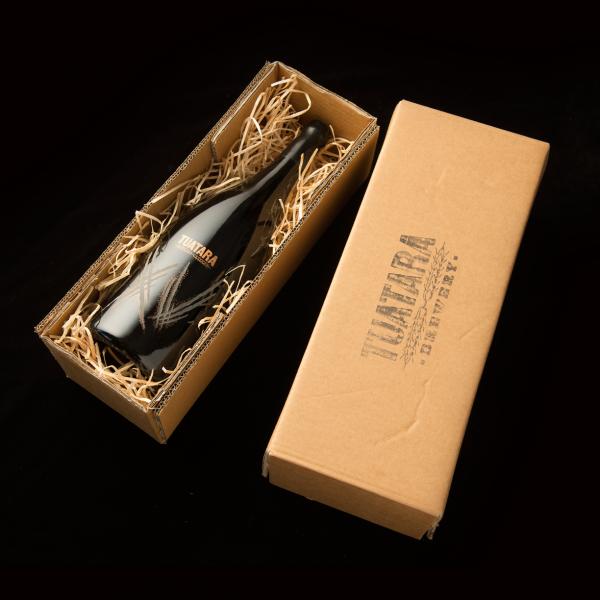
Tuatara is a Wellington based brewery and one of the most well-known brewers of craft beer in New Zealand. Even their bottles are easily identified. Their bottle neck features a depiction of the scales and spine of New Zealand's famous native lizard, the Tuatara.

I’ve chosen to review the Double Trouble for two reasons. Firstly, it was my favourite craft beer for a while and secondly because when it comes to hops, few beers are as “hoppy” as the Double Trouble.

What are hops? The “hops” used in beer are the flowers (or seed cones) of the hop plant. They are used to stabilize and preserve beer and also to balance the sweetness of the malt in beer. Hops are what makes a beer bitter and also provide the different flavour and aroma profiles at times described as grassy, zesty, spicy, lemony, citrus like, or floral. It all depends on the type(s) of hops used in the brewing process.

In craft beer world a scale is used to measure the bitterness of a beer. It’s called the International Bittering Units scale (IBU). The Tuatara Double Trouble is rated a 167! To put it in perspective a standard IPA is just over 40 and yet a beer where you would expect some bitter tasting notes to come through. So when it comes to the Double Trouble expect it to be bitter! 167 is mental, but that’s why I’m starting with this beer, to highlight the “hops” factor. I’ll try and explain an IPA and an APA another time. Now it’s time to pop-the-top and have a taste.

Price: $11.99 for 500mls (This makes it one of the more expensive NZ craft beers).

Alcohol content: 9% (IPA’s and APA’s traditionally have a higher alcohol content. In the case of the Double Trouble I think Tuatara just wanted to make it an all-round big beer. So use common sense please. 500mls is 3.6 standard drinks).

Colour: Golden but off set with a touch of cloudiness that gives it a slightly brown hue.

Aroma: Sweet and floral. Not floral in the sense of flowers or perfume though, rather more like floral in the sense of having just weed-wacked everything that might even be a little bit over grown in the back yard.

Palate: A very sweet beer with lovely citrus / herb like notes. Sweet and savoury. Lovely to swirl around in your mouth.

Finish: The finish is what makes this beer. When it comes to IBU, 167 is massive and the swallow and aftertaste of bitterness in this beer is off the charts! The bitterness of the aftertaste sticks around for ages and you’re left with no doubt as to the “hoppy” side of craft beer. There is a slightly sweet malty taste left in your mouth but it is incredibly subtle. There is also know hiding the high alcohol content, it is kind of obvious. 

On the Chart: The Double Trouble is a fine example of a very hoppy beer. What subtle malt flavours you might pick up don't tone it down in the slightest. At the same time it is certainly not watery in any way. There is depth and flavour all the way though. The complexity of this beer is the hops though rather than hints of tropical fruit, spice, etc. With that in mind, I'll place it all the way out to the left but right on the line. 

Conclusion: Tuatara has nailed it, but in nailing it they’ve likely created a beer that is pretty polarizing. If you aren’t used to hops, you’ll find the finish overwhelming and it’ll potentially put you off ever trying a craft beer. What you have to appreciate is that this beer sits out at one end of the scale, the hop scale. Others, we’ll find, are a little more balanced. So while it used to be a favourite, ultimately I found it too expensive and too bitter. But still awesome!